
New Industry Guide Explains How Automated Drone-in-a-Box Systems Work and Key Criteria for Selecting the Right Solution
Sheridan, Wyoming, USA – November 24, 2026
A drone-in-a-box system combines a compatible aircraft, an automated docking station, remote operations software, and site infrastructure so an organization can run repeatable drone missions without transporting a flight crew to the launch point each time. The dock protects the aircraft, supports automated takeoff and landing, restores battery power, and helps transfer mission data. The wider system turns those functions into a monitored inspection or response workflow.
For utilities, industrial facilities, public-safety teams, and infrastructure operators, the main purchasing question is not simply which dock flies the farthest. It is which system can complete the required missions reliably, safely, and economically at the intended site. Charging method, aircraft compatibility, communications, weather limits, maintenance access, and local operating permissions all affect that answer.
 What Is a Drone-in-a-Box System?
The term drone-in-a-box describes a coordinated system, not just a protective enclosure. A typical deployment includes an enterprise drone with the right camera or sensor, a precision landing platform, a charging or battery-exchange mechanism, communications equipment, mission-management software, and an approved operating procedure.
A basic drone docking station may only store and recharge an aircraft. A more capable autonomous drone dock can handle scheduled departures, return-to-dock operations, environmental checks, data upload, and remote status monitoring. The extent of automation differs by model and software configuration. Even a highly automated installation still needs accountable operators, maintenance, incident procedures, and the necessary aviation authorizations.
This distinction matters in procurement. Buying a weatherproof dock does not automatically deliver a functioning remote inspection service. Buyers should specify the entire system and its expected output—for example, a weekly thermal inspection report with repeatable viewpoints—before comparing hardware.
How Does an Autonomous Drone Dock Work?
Most automated drone stations follow a six-stage operating cycle:
- Mission request: An approved operator schedules an inspection or authorizes an event-triggered flight. The route, camera settings, and reporting requirements are defined in advance.
- Preflight checks: The system evaluates aircraft health, battery status, dock condition, communications, positioning, local weather, and operating permissions. A failed check should prevent launch or require an authorized intervention.
- Automated launch: The enclosure opens, the aircraft powers up, and the drone takes off within the applicable safety conditions.
- Data collection: The aircraft follows an approved route, capturing visible, thermal, or other sensor data. Remote personnel maintain the required level of oversight.
- Recovery and servicing: The drone returns, lands precisely, and is secured. Depending on the dock, its battery is charged or exchanged, and the flight data is transferred.
- Review and readiness: The team checks the imagery and flight log, records exceptions, and prepares the next mission. A completed flight is useful only when the resulting data can support a decision.
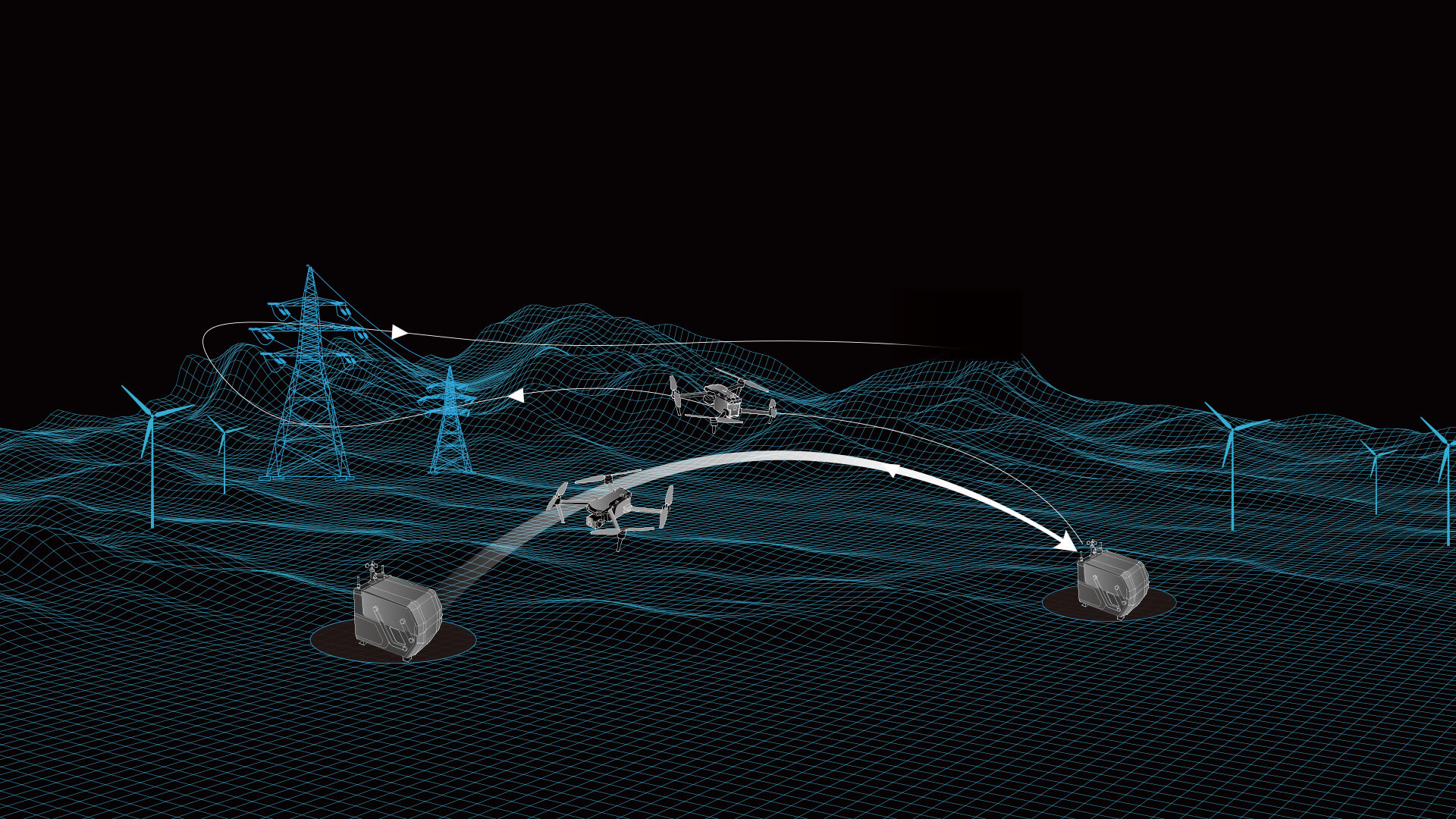
For remote or extended inspection routes, some deployments use more than one dock. A relay arrangement may allow aircraft to work across separate stations, but communication coverage, compatibility, airspace approval, and recovery contingencies must be tested for the actual route.
 Main Types of Drone Docking Stations
Drone dock types are best compared by how the aircraft is serviced, rather than by a generic claim of being fully autonomous.
| Dock type | How it works | Best-fit requirement | Important trade-off |
|---|---|---|---|
| Automatic charging dock | The drone lands and recharges while parked | Planned inspection intervals with time available between flights | Charging duration affects how many missions one aircraft can complete |
| Automatic battery-swapping dock | A mechanism replaces the depleted battery with a charged pack | Frequent sorties and short turnaround targets | Added mechanisms, spare batteries, maintenance, and compatibility checks |
| Compact or remote-site dock | Smaller enclosure optimized for constrained sites, often with remote monitoring | Rooftops, towers, isolated facilities, or distributed coverage | Site access, power, network availability, and service logistics |
| Multi-dock network | Several compatible stations coordinate an inspection area | Large facilities or corridor monitoring | Fleet management, handoff validation, infrastructure, and permissions |
A charging dock can be the better business choice when inspections occur a few times per day. Battery swapping may be worth its complexity when turnaround time drives the service requirement. A multi-dock network is an operating architecture rather than a universally interchangeable hardware category.
Compare K01, K02, and K03 Docking Options
Our catalog includes several configurations for different aircraft families and deployment requirements. These are not interchangeable docks: aircraft compatibility and the complete proposed package must be confirmed before ordering.
| Product | Documented servicing approach | Aircraft or deployment fit | Procurement focus |
|---|---|---|---|
| K01 | Automated landing, charging, and data management | S400E-compatible industrial operations | Installation footprint, power supply, and integration |
| K02 | Automated battery exchange and remote management | S200-series operations requiring shorter turnaround | Battery inventory, swap mechanism, and system acceptance test |
| K03 | Compact auto-charging with remote monitoring | Space-constrained or dispersed fixed installations | Power consumption, charging interval, and site connectivity |
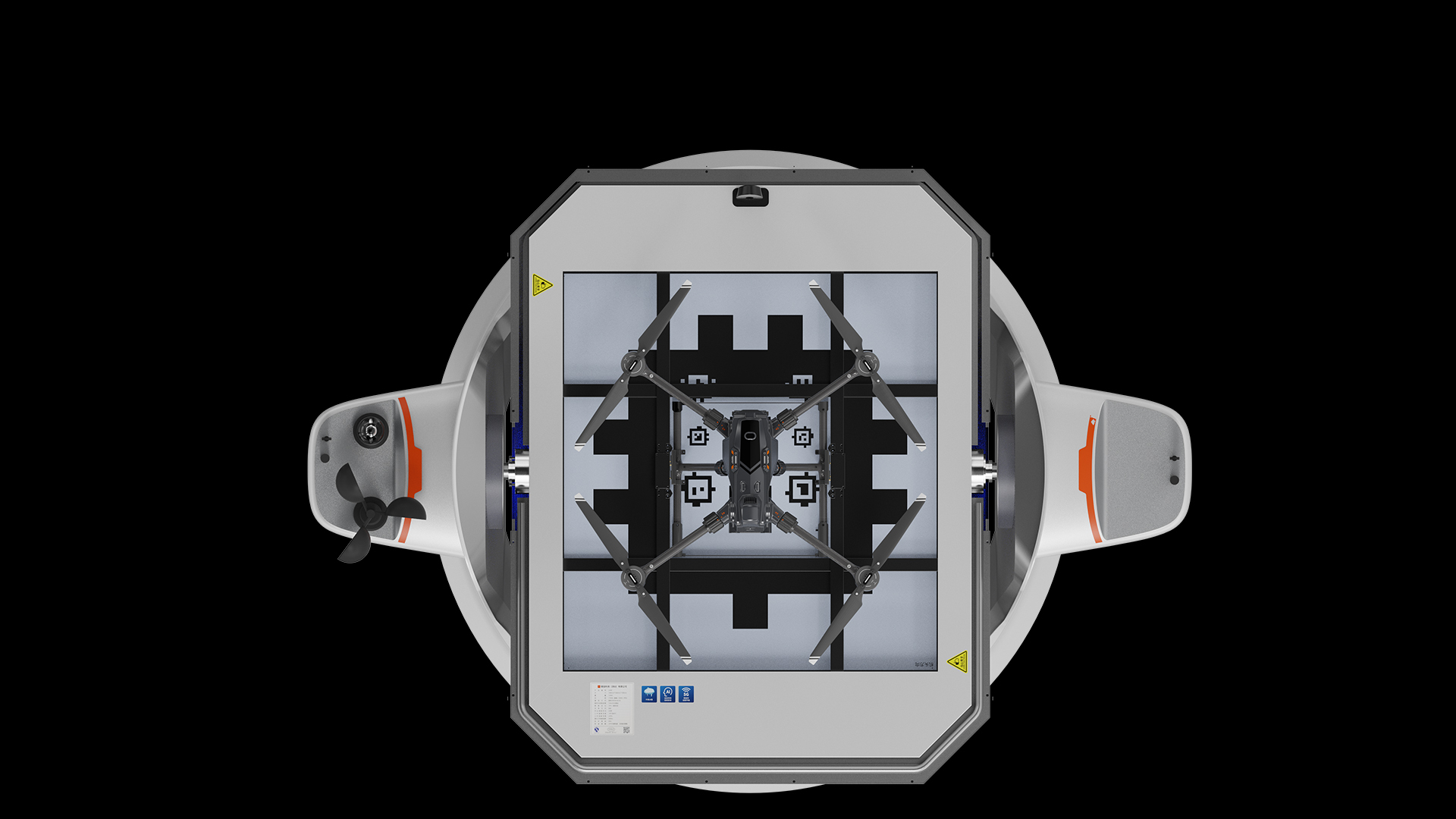
K01: A Fixed Base for Repeatable Industrial Missions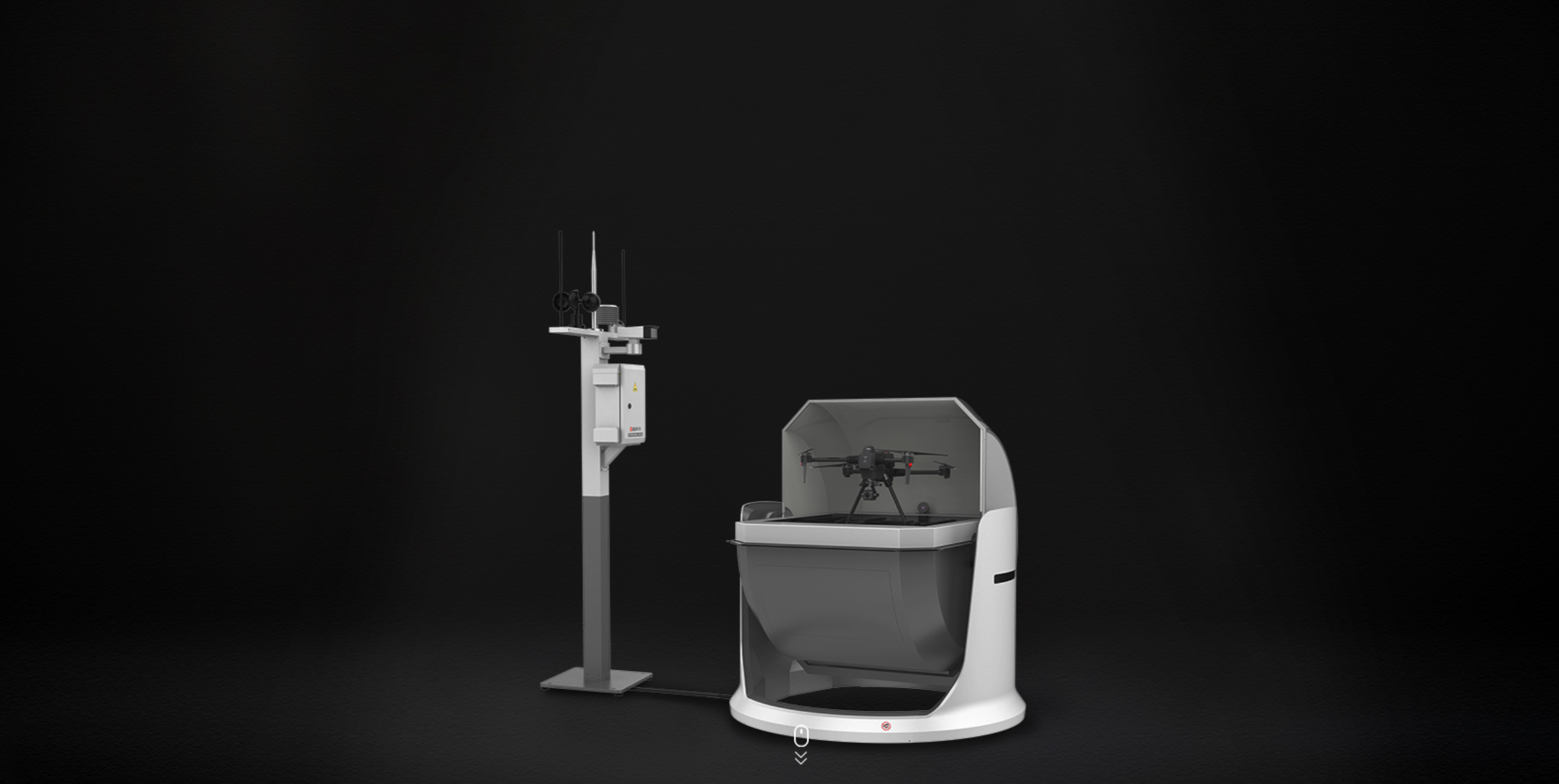
The K01 autonomous dock is described with S400E compatibility, precision landing, automated charging, and remote supervision. It is worth evaluating for facilities that want repeatable equipment or perimeter inspections from a fixed location. Buyers should review structural loading, access for maintenance, required power, and data-system integration rather than treating maximum communication distance as guaranteed inspection coverage.
K02: Battery Exchange for Rapid Mission Turnaround
The K02 docking station is designed for the S200 series and includes automatic battery swapping, remote management, and precision landing. Its published specifications describe a battery-exchange cycle of up to two minutes and a work interval of up to three minutes under specified conditions. A buyer should validate those figures with the actual aircraft, battery inventory, route, and ambient conditions during acceptance testing.
K03: Compact Charging for Distributed Sites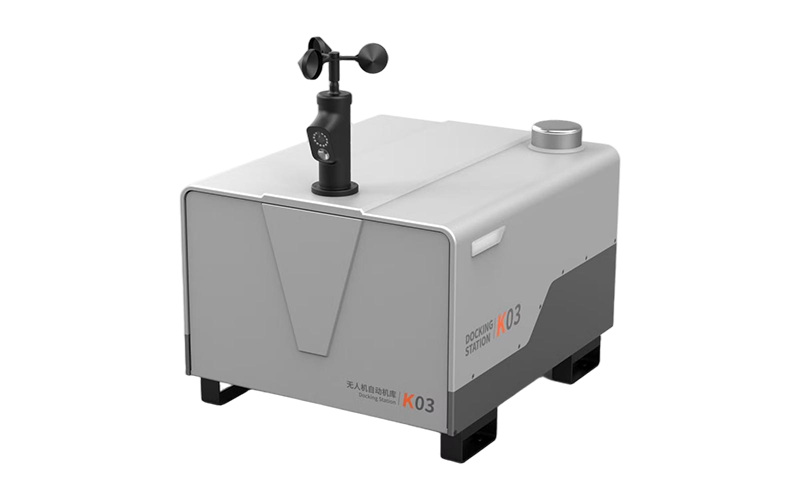
The K03 autonomous docking station emphasizes compact installation, auto-charging, weather monitoring, and remote management. The published specification lists a charging interval of less than 35 minutes from 10% to 90%, subject to its stated test conditions. For a rooftop or remote equipment yard, the most relevant questions are whether the site can support the dock’s electrical and network requirements and how maintenance personnel will reach it safely.
Published product pages sometimes describe functions differently across sections. Confirm the current revision, aircraft compatibility, charging or swapping method, and final technical datasheet in writing before making a purchasing commitment.
Five Applications Where Docked Drones Make Practical Sense1. Power Lines and Utility Assets
Utility teams can use scheduled drone routes to compare visible equipment condition or thermal anomalies over time. The value lies in repeated capture positions and consistent inspection records, not just faster flight. For a power-line project, ask how the system handles obstacles, electromagnetic interference, vegetation, and safe recovery when a route cannot be completed. Explore the power-line inspection workflow when defining the sensor and reporting requirements.
2. Industrial Parks and Large Facilities
Large sites may need regular roof inspections, boundary observations, equipment checks, and incident documentation. A fixed station can reduce repeated travel to the launch point, while a common mission template makes monthly comparisons easier. Teams should agree on inspection frequency, escalation thresholds, image retention, and the location of sensitive areas before installation.
3. City Infrastructure and Public Assets
Bridge approaches, municipal facilities, and other public assets can benefit from repeatable overview imagery where flights are permitted. Urban operations require particularly careful analysis of airspace restrictions, nearby people, signal coverage, privacy, and emergency landing areas. A drone dock does not remove these responsibilities; it increases the need for documented procedures and remote situational awareness.
 4. Bridges, Roads, and Transport Corridors

A corridor inspection may require multiple viewing angles and a defined photographic record of each span or segment. The procurement challenge is less about claiming unlimited range and more about ensuring that the approved route, camera angles, ground clearance, link margin, and return-to-base reserves work together. For detailed structural assessment, drone imagery should complement—not replace—qualified engineering inspection.
5. Emergency Response and Remote Awareness
An approved docked-drone response program can provide early visual context for safety personnel after an alarm or incident. Remote aircraft may help assess access routes, visible hazards, and the extent of an affected area before teams enter. The deployment still needs clear rules for who can dispatch a flight, what the operator can see, how data is shared, and what happens if weather or communications prevent launch. The public-safety drone solutions provide a starting point for defining those use cases.
 How to Plan an Autonomous Drone Dock Deployment
A successful installation starts with the site and the required deliverable—not a hardware brochure.
Define the mission. State how often flights are required, the assets to be observed, the needed imagery or measurements, and the person responsible for approving reports. Specify acceptable mission completion and data-delivery criteria.
Survey the location. Confirm the mounting surface, wind exposure, drainage, lightning protection, maintenance access, power reliability, obstruction clearance, and emergency landing options. Check the aircraft’s limits separately from the dock’s enclosure rating; an IP rating does not mean flights are safe in every weather condition.
Engineer the connection. Test primary and backup communications at every relevant flight location. Determine whether data will be transferred locally, over a managed cellular connection, or through an approved cloud service. Document access controls, encryption, storage location, retention, and system ownership.
Confirm legal operations. Remote flight approval, visual-line-of-sight rules, flight-area constraints, and permissions vary by jurisdiction. Do not assume a dock makes beyond-visual-line-of-sight operations automatically legal. Obtain the correct authorization before beginning an operational program.
Run a pilot program. Test launch, return, landing, recharge or swap, data upload, wind-related cancellations, loss of link, and emergency handling. Include the people who will maintain the station and interpret the imagery—not only the drone sales team.
How to Calculate Drone-in-a-Box Cost and ROI
An autonomous drone program can save repeated travel and setup effort, but it also creates fixed-site costs. Calculate total cost of ownership, including the dock, compatible aircraft, sensor payload, installation, communications, software, batteries, maintenance, training, insurance, and regulatory work. Add the cost of periodic site visits and equipment downtime.
For an initial comparison, estimate annual operating cost as annualized equipment and installation cost + recurring services + labor + maintenance + expected downtime cost. Then compare it with the current inspection or response process using the same mission volume and quality standard. Record assumptions explicitly. A dock that is cost-effective for daily inspection may be uneconomical for a site inspected only a few times per year.
A Practical Procurement and Acceptance Checklist
Before approving a purchase order, request a written demonstration plan covering the following points:
- Aircraft compatibility: Exact drone, payload, firmware, landing configuration, and battery versions.
- Mission performance: Typical completed routes, useful flight time, reserve policy, and achieved data quality—not brochure endurance alone.
- Dock reliability: Repeated automated landing, charging or swapping, weather-related launch inhibition, and remote restart procedures.
- Site infrastructure: Electrical load, backup power, network resilience, mounting requirements, and maintenance clearance.
- System integration: User roles, API access, data export formats, audit logs, and interoperability with existing asset systems.
- Service commitments: Spare parts, response responsibilities, remote diagnostics, training, documentation, and warranty exclusions.
- Acceptance criteria: A defined number of successful mission cycles, documented failure recovery, representative weather scenarios, and signed-off data deliverables.
For procurement teams, the final test should reproduce a real mission at the intended location wherever practical. Ask for evidence of both successful flights and how the system behaves when conditions are unsuitable. This reveals operational maturity more clearly than a polished demonstration video.
Frequently Asked QuestionsIs a drone-in-a-box the same as a drone docking station?
Not exactly. The docking station is the physical launch, recovery, storage, and servicing equipment. A complete drone-in-a-box system also includes the aircraft, software, communications, trained operators, and procedures needed to deliver missions.
What is the difference between drone charging and battery swapping?
Charging restores power while the aircraft remains parked, whereas battery swapping replaces a depleted pack with a charged one. Swapping may shorten turnaround, but it requires compatible hardware, additional batteries, and more mechanical maintenance.
Can a drone dock operate 24/7?
It can remain on standby and support repeated missions around the clock if designed for that service, but individual flights remain subject to weather, maintenance, battery availability, communications, and aviation authorization. Continuous readiness should not be confused with continuous flight.
Can drone docking stations be installed on rooftops?
Some compact systems can be installed on suitable rooftops, subject to structural capacity, wind conditions, access, electrical protection, communications, and local approvals. A site survey is essential.
Are drone-in-a-box systems legal for BVLOS flights?
Automation does not itself grant permission for beyond-visual-line-of-sight operations. The operator must follow the applicable aviation rules and obtain any required approvals for the location and mission.
Which dock is best for a power-line inspection program?
The answer depends on route length, inspection frequency, camera requirements, permissible flight area, recharge interval, and the number of launch sites. Start with the mission and validate a complete aircraft-plus-dock configuration rather than buying from an isolated specification.
Plan a Drone Dock System Around Your Mission
The best autonomous drone station is the one that repeatedly delivers the data your team needs within the site’s real operating limits. Whether the project involves utility patrols, facility monitoring, or an approved response network, we can help compare K01, K02, and K03 configurations against your aircraft, deployment site, mission frequency, and required deliverables. Share your requirements with our team to begin a practical system discussion.
About Us
We turn drones from tools into infrastructure, enabling the global low altitude economy with engineering rigor and compliance.To become the core infrastructure provider for the global low altitude economy. We will keep integrating 5G, AI and hydrogen energy to drive standardized, intelligent and green aerial operations.
Media Contact
Company Name: UUUFLY AeroTech Corp.
Contact Person: Media Relations
Email: Send Email
Country: China
Website: https://www.viscolift.com/


