
True Plumbing Solutions Shares Cold-Weather Plumbing Tips for Minnesota Homeowners
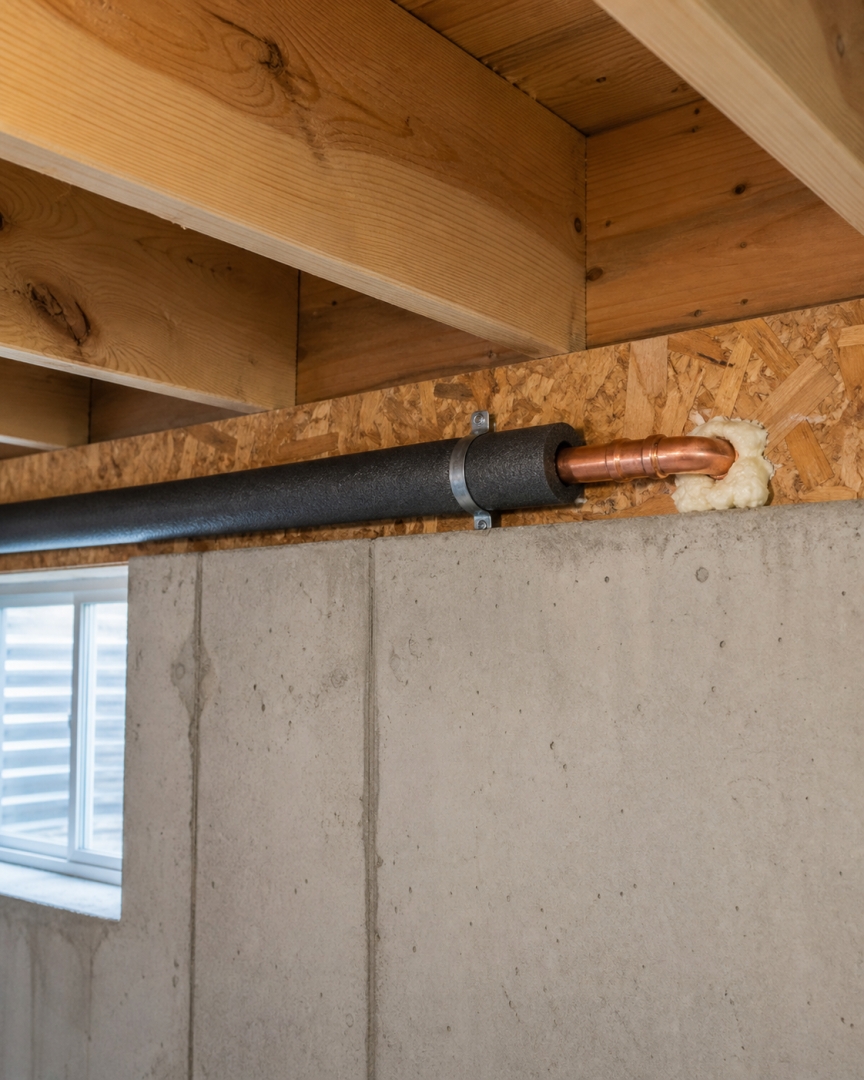
SAVAGE, Minn. – November 4, 2026 – True Plumbing Solutions is highlighting cold-weather plumbing preparation for homeowners in the Minneapolis-Saint Paul south metro. The Savage-based company’s published resources address exposed supply pipes, indoor heat, sump pump condition and water heater maintenance as Minnesota enters the winter season.

Cold-weather supply-pipe illustration from True Plumbing Solutions.
The company’s seasonal guidance brings together several maintenance decisions that homeowners can discuss during a service visit: which pipes are exposed to cold air, whether outdoor lines have been prepared for winter, how reliably a sump pump operates and whether a water heater is due for maintenance. The American Red Cross provides additional frozen-pipe prevention guidance. Historical Minnesota climate records offer seasonal context, but do not predict conditions at a particular property.
Historical Climate Context
In a historical climate-journal article, the Minnesota DNR reported that the average first freezing reading at the Minneapolis-Saint Paul airport falls on October 7, measured from the airport’s current thermometer location, which has been in place since 1960. The same article reports that, historically, roughly 90 percent of autumns produce a 32-degree reading in the Twin Cities by October 28. It also records that the first freeze of 2016 did not arrive until November 18, the latest on record in a series that extends back to 1873 Minnesota DNR historical first-freeze records.
These figures describe the historical record available when the DNR article was written. They are not a forecast for November 2026 or a deadline that applies to every home. Exposure, insulation and the weather at an individual property determine present risk. The seasonal message is to assess vulnerable plumbing before a cold spell creates an urgent repair.
Pipe Exposure and Freeze Risk
True Plumbing Solutions answers the question directly on a page titled At what indoor temperature do pipes freeze in a Minnesota home?, updated in October 2026. The page begins with the physics: water freezes at 32 degrees Fahrenheit, so any pipe whose surrounding air reaches 32 degrees or colder is at risk. It then explains why the thermostat in the living room is a poor guide. The air inside a wall cavity, a crawl space or an unheated garage can be far colder than the room the thermostat serves.
According to the page, a common rule of thumb is that pipes become vulnerable when outdoor temperatures drop to 20 degrees or below and stay there for six or more hours. The company gives illustrative outdoor-temperature thresholds for exposed locations. These are rough planning examples, not safe-temperature guarantees; actual risk depends on insulation, air leakage, heat supply and duration of exposure:
- Exterior wall cavities: 20 degrees or below, sustained for six hours or more, because insulation slows heat loss through the wall but does not stop it.
- Vented crawl spaces: 25 degrees or below, because crawl-space air tracks outdoor temperature closely.
- Unheated attached garages: 30 degrees or below, because garage air drops quickly and any water line routed through the garage is exposed.
- Cabinets on exterior walls: 20 degrees or below, because closed cabinet doors keep interior heat from reaching the pipe.
- Vacant homes with the heat off: any sustained outdoor freeze, because the interior temperature eventually matches the outdoor temperature.
The page adds that exposure time matters as much as the raw temperature, and that moving water is much harder to freeze than standing water. It also notes that pipe material plays a role: copper and CPVC pipes are the most likely to crack when they freeze because they have little elasticity, PEX can flex when ice forms inside it but is not freeze-proof, and older galvanized steel lines already narrowed by corrosion have less room before they crack.
Indoor Heat and Vacant Homes
On thermostat settings, the company’s page says to keep the thermostat at 55 degrees or higher when a home is unoccupied or during extreme cold spells, and says that most licensed Minnesota plumbers recommend 60 degrees as a practical minimum during a prolonged stretch below zero. The page also says never to turn the heat off entirely in a Minnesota winter, and that a home left vacant over the winter should have pipe insulation sleeves and a fully drained supply system rather than a low thermostat setting alone.
The 55-degree figure matches the American Red Cross, which advises that anyone going away during cold weather should leave the heat on, set to a temperature no lower than 55 degrees American Red Cross frozen-pipe guidance. The Red Cross adds a second habit worth adopting in November: keep the thermostat set to the same temperature during the day and at night. By suspending lower nighttime temperatures, the organization says, a household may incur a higher heating bill but can prevent a much more costly repair if pipes freeze and burst.
Cold-Weather Pipe Preparation
The Red Cross recommends doing several things before the onset of cold weather, and the company’s page points at the same exposed areas. Combined, they make a short list that fits into a weekend:
- Drain the outdoors. The Red Cross says to remove, drain and store hoses used outdoors, close the inside valves that supply outdoor hose bibs, and open the outside hose bibs so remaining water can drain and expand without breaking the pipe.
- Insulate unheated spaces. The Red Cross advises adding insulation to attics, basements and crawl spaces, and insulating both hot and cold water pipes in the garage and under kitchen and bathroom cabinets. It names pipe sleeves and UL-listed heat tape or heat cable as products made for exposed pipes.
- Open the cabinets on cold nights. Opening kitchen and bathroom cabinet doors lets warmer air circulate around the plumbing. The Red Cross reminds households to move harmful cleaners and chemicals out of reach of children first.
- Let a faucet drip during a hard freeze. The Red Cross says that running water through a pipe, even at a trickle, helps prevent freezing. The company’s page agrees that a drip slows freezing but says it does not replace insulation or an adequate thermostat setting.
- Keep the garage door closed if water supply lines run through the garage.
Responding to a Suspected Frozen Pipe
The Red Cross says a faucet that produces only a trickle is a warning sign, and that likely locations include pipes against exterior walls or where the water service enters the home through the foundation. Its advice is to keep the faucet open, apply heat with an electric heating pad, a hair dryer or towels soaked in hot water, and never use a blowtorch, a kerosene or propane heater, a charcoal stove or another open flame. If the frozen area cannot be found or reached, or the pipe will not thaw, the Red Cross says to call a licensed plumber.
The company’s page takes a similar posture. It recommends turning off the home’s main water shutoff immediately if a frozen pipe is suspected, because that stops flooding the moment a cracked pipe thaws, and then calling a plumber. It warns against using an open flame or a heat gun directly on a pipe without professional guidance. For a household that loses heat during a cold snap, the page advises shutting off the main water supply if heat cannot be restored within a few hours, opening cabinet doors under sinks on exterior walls, and calling both an HVAC service and a plumber when outdoor temperatures are already below 20 degrees.
Sump Pump Repair and Replacement
Freezing pipes are the winter risk. The sump pump is the spring one, and fall is the quiet window in which to check it. True Plumbing Solutions publishes a second guide, Sump Pump Parts vs. Full Replacement: Which Do You Need?, that sets out when a part repair makes sense and when a new pump is the better value.
According to the guide, most submersible sump pumps last seven to ten years with normal use, while pedestal pumps, which keep the motor above the pit, can last ten to fifteen years. The guide says Minnesota homes typically run their pumps hard during spring snowmelt and summer storms, which shortens pump life compared with drier climates. A backup pump may last five to seven years, the guide says, and a backup battery typically needs replacement every three to five years, so the backup and the primary pump age on separate schedules.
The company lists the parts that tend to fail before the motor does, with typical installed costs for the Minneapolis-Saint Paul metro:
- Float switch, which triggers the pump when water rises: $50 to $150 installed.
- Check valve, which prevents backflow into the pit: $75 to $175 installed.
- Discharge pipe or fitting, which carries water out of the home: $75 to $200 installed.
- Backup battery: $100 to $250 installed.
- Submersible pump replacement: $400 to $700 installed.
The guide says that a repair is usually the better value when the pump is younger than seven years, has no history of repeated failures and has one clearly identifiable failed component. It recommends a full replacement when the pump is seven to ten years old or older, the motor has seized, the pump runs constantly without keeping up with inflow, or the same pump has been repaired two or more times in the past three years. The company states that these are installed cost ranges for the metro that include parts and labor, and that prices vary with the pump model, the pit configuration and access.
Sump Pump Operating Problems
A separate company article, Troubleshooting Guide: 6 Common Sump Pump Problems and Solutions, walks through six failure patterns: failing switches, outright pump failure, clogged discharge lines, an overwhelmed pump, float switch problems and a pump that runs constantly. For homeowners who want to check things themselves first, the article suggests keeping the sump pit clean and inspecting switches for debris, and checking the power connection and circuit breaker if a pump fails. It advises contacting a professional for problems such as a broken switch, a clogged discharge line or a pump that will not stop running, and describes a backup or larger pump as the remedy for a pump that cannot keep up with water volume.
Water Heater Maintenance
Fall is a sensible moment to put a water heater on the calendar. The company’s water heater service page states that water heaters should be serviced every 6 to 12 months and that descaling to remove mineral buildup is recommended every few years. The page lists water heater service, repair, installation and replacement among the company’s offerings, and names Minneapolis, Eagan, Eden Prairie and a long list of surrounding communities as its service area, including Bloomington, Burnsville, Edina, Lakeville, Plymouth, Prior Lake, Savage, Shakopee and St. Paul.
A homeowner who cannot recall when the water heater was last serviced can use that interval as a prompt. Pairing the service call with a look at pipe insulation, hose bibs and the sump pit lets one visit cover the water heater, the exposed pipes and the pump together.
Seasonal Service InformationPipe Temperature and Exposure
Water freezes at 32 degrees Fahrenheit. True Plumbing Solutions says pipes inside exterior walls, crawl spaces or unheated garages typically reach that point when outdoor temperatures drop to 20 degrees or below and stay there for six or more hours, and that pipes in open crawl spaces or attached garages can freeze at outdoor temperatures in the mid-20s.
Historical First-Freeze Records
The Minnesota DNR’s historical article reports an October 7 average first freeze at the airport and a 32-degree reading by October 28 in roughly 90 percent of the autumns it analyzed. Those historical figures do not establish this season’s conditions or the temperature around a particular pipe.
Thermostat Guidance
Both the American Red Cross and True Plumbing Solutions cite 55 degrees as the minimum for a home left unoccupied during cold weather. The company’s page adds that many Minnesota plumbers recommend 60 degrees as a practical minimum during a prolonged stretch below zero.
Flow and Insulation
The Red Cross says running water through a pipe, even at a trickle, helps prevent freezing. The company’s page describes a drip as a useful precaution on an extreme cold night, but not a replacement for insulation or a proper thermostat setting.
Sump Pump Service Life
The company’s guide says most submersible pumps last seven to ten years and pedestal pumps ten to fifteen years, with Minnesota conditions tending to shorten that range.
Service Inquiries
The company lists its telephone number as (952) 658-9772 and can be followed on Facebook.
About True Plumbing Solutions
True Plumbing Solutions is a plumbing company based in Savage, Minnesota, serving the Minneapolis-Saint Paul south metro and surrounding communities. According to its website, the company provides plumbing repair and installation, water heater service, sump pump service and gas line work, along with a library of plain-language guides on topics such as frozen pipes, sump pumps and water heaters. The company can be reached at (952) 658-9772.
Media Contact
Company Name: True Plumbing Solutions MN
Contact Person: Keith Swaggert
Email: Send Email
Phone: 19526589772
Address:PO BOX 376
City: Savage
State: MN
Country: United States
Website: https://trueplumbingsolutionsmn.com


