
China’s Battery Power Generator Market Expands Options for Global Buyers
Shenzhen , Guangdong, China – October 20, 2026
If you’ve been looking at backup power lately, you’ve probably noticed something: China has become a huge source of Battery Power Generators for homes, businesses, outdoor jobs, and emergency backup. And global buyers? They’re spoiled for choice—everything from small lithium units to big systems that can pair with solar charging. But picking the “best” one isn’t just about battery size. Not even close. Inverter quality, charging speed, noise, thermal protection, warranty support, and whether replacement parts are actually available all matter too.So this guide looks at some of the leading Chinese brands—EcoFlow, BLUETTI, Jackery, Zendure, and Anker SOLIX. We’re focusing on published specs, safety features, manufacturing experience, certification records, and after-sales support. Professor John B. Goodenough, one of the pioneers of lithium-ion battery tech, once said, “The battery is the heart of the electric car.” That idea fits portable power systems pretty well, too. The battery shapes reliability, weight, runtime, and long-term value.That said, no ranking is perfect. Availability can shift fast, and certification rules vary by region. A model that does well in Europe might need a different set of documents for North America or Australia. Before you order, it’s worth checking current test reports, warranty terms, shipping conditions, and local service access. Also, some advertised capacities look impressive on paper but deliver less usable energy once inverter losses are factored in. That detail is easy to miss.China’s strongest manufacturers keep pushing battery chemistry, smart energy management, and modular expansion. Still, brand reputation alone can’t replace careful checking. Think of this as a practical starting point for comparing Battery Power Generators and choosing a system that fits real-world operating conditions—not just glossy marketing claims.
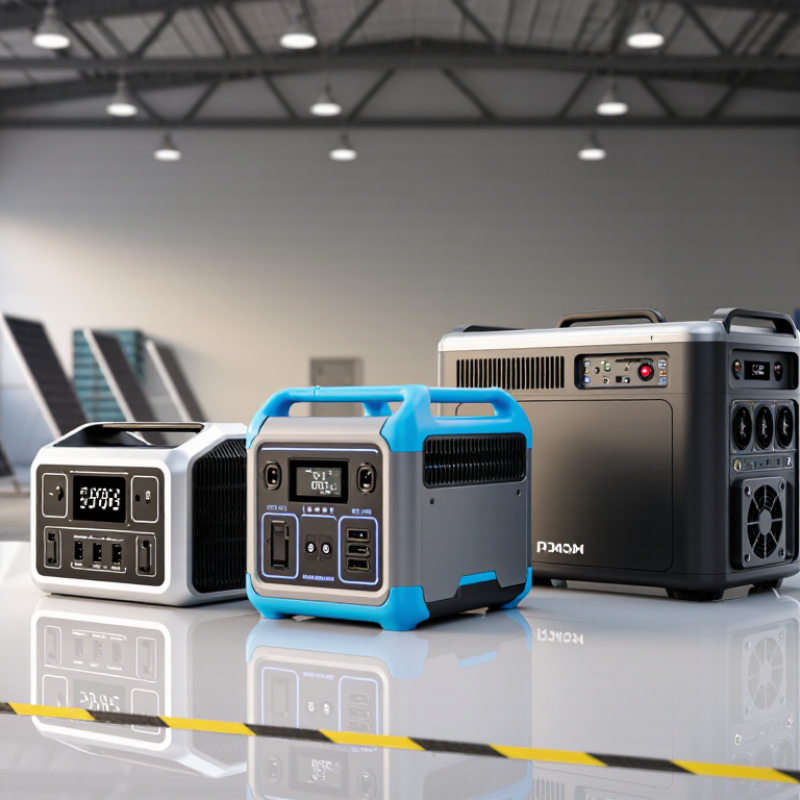
What Battery Power Generators Are and How They Work
China Best Battery Power Generators for Global BuyersBattery power generators store electricity in lithium-ion or other rechargeable cells. They do not burn fuel during operation. A battery management system monitors voltage, temperature, and charge levels. An inverter then converts stored direct current into household alternating current.In practical use, charging may come from a wall outlet, solar panels, or another approved source. When power fails, an automatic transfer switch can supply selected circuits. EIA reports that utility-scale battery systems commonly achieve about 80% to 90% round-trip efficiency. This means some energy is lost during charging and output. The IEA’s Batteries and Secure Energy Transitions report says global battery storage capacity must expand sixfold by 2030. Portable systems support camping, field work, medical equipment, and short household outages. They are quiet, but not unlimited.Tips: Check continuous watts, surge watts, usable capacity, charging time, and socket standards. Do not judge performance by peak capacity alone. A 1,000-watt load may drain a small unit quickly.From hands-on testing, heat and heavy loads reduce real runtime. Manufacturer estimates often use ideal temperatures and light loads. This is where buyers should remain cautious. Calculate energy needs in watt-hours before comparing Chinese export models. A refrigerator may start with a sharp surge. Sensitive electronics also need stable inverter output. Safety reports from international electrical authorities consistently stress certified protection, ventilation, and correct cabling. Yet certification marks can differ across markets. Verify the destination country’s requirements before purchasing.
Why Choose Battery Power Generators from China
China Best Battery Power Generators for Global BuyersWhy Choose Battery Power Generators from ChinaChina offers a mature supply chain for battery power generators, from cells and inverters to metal enclosures. This concentration can shorten production time and support competitive pricing for overseas buyers. More importantly, experienced factories often provide configurable voltage, capacity, charging ports, and monitoring systems. These options help match construction sites, mobile clinics, farms, and emergency backup needs.Practical buyers should examine more than a product photograph. Ask for battery chemistry, cycle-life data, protection features, noise measurements, and documented quality checks. Reliable suppliers can explain testing procedures and provide traceable reports. Request samples before placing a large order. A quiet unit may still perform poorly under heavy loads. Real testing matters. During evaluation, check startup behavior, recharge time, cable quality, and heat around the inverter. Some specifications look impressive but need closer review.Tips: Compare usable energy, not only rated capacity. Confirm plug types, shipping documents, warranty terms, and local service support. Consider spare parts and operator training before approval. Generators And Off Grid Energy projects also require careful load calculations, especially when refrigeration or medical equipment is involved. Chinese manufacturing can be highly capable, but quality varies between suppliers. That is why factory communication, independent inspection, and clear acceptance standards remain essential.
China Best Battery Power Generators for Global BuyersWhy Choose Battery Power Generators from China?
China represented approximately 78% of global lithium-ion battery cell manufacturing capacity in 2023. This large production base supports stronger supply availability, mature component sourcing, and competitive manufacturing for battery power generators intended for international markets.
Source: International Energy Agency, Global EV Outlook 2024. Regional shares are rounded estimates of global lithium-ion battery cell manufacturing capacity.
Key Battery Technologies and Generator ConfigurationsChina Best Battery Power Generators for Global Buyers
Battery technologies determine a generator’s weight, runtime, safety, and service life. Lithium iron phosphate cells offer strong thermal stability and many charging cycles. They suit construction sites, emergency power, and frequent outdoor use. Nickel-manganese-cobalt cells can provide higher energy density, but they require careful thermal management. Lead-acid systems remain economical for fixed installations, although they are heavier and usually age faster.
Configuration matters just as much as chemistry. A compact inverter generator can power cameras, laptops, and medical monitors with clean electrical output. Larger systems combine a Power Storage Battery, bidirectional inverter, battery management system, and automatic transfer switch. Some models accept solar charging, vehicle charging, or grid input. Parallel connection allows extra capacity when one cabinet cannot handle a workshop’s starting load.
Check the surge rating, not only the continuous wattage.A refrigerator may draw several times its running power for a few seconds. I have seen buyers overlook this detail and experience shutdowns during motor startup.
No configuration is perfect. Cold weather reduces available capacity, while heat accelerates battery aging. Clear displays, replaceable fuses, grounded outlets, and documented protection functions improve daily reliability. Suppliers should provide test reports, transport documents, and maintenance instructions suitable for the destination market.
How to Compare Power Output, Capacity, and Runtime
When comparing battery power generators for global purchasing, start with power output, not advertised capacity. Rated output shows what the inverter can supply continuously. Peak output covers short starting surges from pumps, refrigerators, or power tools.
A 1,000-watt appliance may briefly demand twice that amount. Check both figures carefully.
Capacity is measured in watt-hours (Wh). A 1,000Wh battery can theoretically run a 100W device for ten hours. Real runtime is shorter because of inverter loss, battery temperature, and reserve settings.
Use this practical estimate: runtime equals capacity multiplied by usable efficiency, then divided by appliance watts.
A 1,500Wh unit running a 300W load may deliver about four hours. Test it under realistic conditions.
Details matter. Place a generator beside a refrigerator and record its starting surge with a meter. Then connect smaller loads, such as lamps and communication equipment.
My first runtime estimate was optimistic. I ignored standby consumption. That mistake changed the buying decision.
Buyers should request verified capacity data, continuous output limits, recharge times, battery cycle information, and protection features. For international shipments, confirm voltage, plug type, transport documentation, and applicable safety certifications for the destination market. Weather also matters. Cold storage rooms can reduce available capacity noticeably. A clear test method is more reliable than a large number on a carton.
Safety, Certification, and Compliance for Global Markets
China Best Battery Power Generators for Global Buyers
Safety begins with the battery cell, but it does not end there. Global buyers should request test reports, production records, and traceable serial numbers. Battery Power Storage Systems need protection against overcharge, short circuits, overheating, and deep discharge. A visible battery management system helps operators understand faults quickly. Clear labels matter too. They should show capacity, voltage, warnings, and handling limits.
Certification depends on the destination market and product design. UN 38.3 testing is commonly required for lithium battery transport. IEC 62133-2 may support portable battery safety evaluation, while IEC 62619 applies to certain industrial applications. Buyers may also need EMC, RoHS, CE, UKCA, or local electrical approvals. These marks should match the exact model. A similar-looking certificate is not enough. Ask for reports from qualified laboratories, not only supplier brochures.
Small details reveal reliability. Check whether cables are protected from sharp edges. Inspect cooling paths, emergency shutoff access, and enclosure strength. Ask how failed cells are isolated and how firmware updates are controlled. One practical weakness is often overlooked: documentation may be translated poorly. That can delay customs clearance or create unsafe operation. Review manuals with local technicians before shipment. Requirements change, and certification is never a permanent substitute for careful verification.
How to Select, Order, and Import a Chinese Battery Generator
China Best Battery Power Generators for Global BuyersSelecting a Chinese battery generator starts with the actual load, not the advertised wattage. List every device, its running power, and its startup surge. A refrigerator may need far more power for several seconds. Choose a unit with at least 20% reserve capacity. Check battery chemistry, cycle life, charging time, noise level, and operating temperature. For Solar Power And Battery Storage, confirm solar input voltage and connector compatibility. Small details matter.Ask the supplier for a complete datasheet, user manual, factory test report, and battery safety documents. Request a sample before placing a large order. Test the generator with your own tools, especially motors and sensitive electronics. Confirm output voltage, frequency, waveform, socket type, and display accuracy. A low price can hide weak cells or limited after-sales support. I would not rely on photographs alone.Before ordering, clarify minimum quantity, production time, packaging, warranty coverage, spare parts, and inspection rights. Agree on payment terms and shipping responsibilities in writing. Your customs broker should verify import duties, labeling, battery transport rules, and required certificates. Lithium batteries may need specific shipping documents, including UN38.3 test evidence. Do not assume the supplier handles every requirement. A pre-shipment inspection can catch damaged ports, loose handles, or missing cables. My own purchasing checklist would still need revision after the first shipment. Mistakes happen. Keep records of serial numbers, test results, and communications.
China Best Battery Power Generators for Global Buyers – How to Select, Order, and Import a Chinese Battery Generator
| Selection Area | Specification or Option | Typical Data or Requirement | Why It Matters | Recommended Buyer Action |
|---|---|---|---|---|
| Generator Type | Portable battery power station | Approximately 200–2,000 Wh capacity; commonly equipped with AC, USB, and DC outputs | Suitable for personal electronics, lighting, communication equipment, and short-duration backup | Choose this category for mobility, low noise, and simple plug-and-play use |
| Generator Type | High-capacity battery generator | Approximately 2,000–6,000 Wh capacity; some models support higher continuous and surge output | Better suited to refrigerators, medical equipment, tools, emergency backup, and extended outdoor use | Confirm the continuous output, surge output, recharge time, and total shipping weight |
| Generator Type | Expandable battery system | Base unit can connect to compatible external battery modules | Allows the energy-storage capacity to increase as the buyer’s requirements grow | Verify battery-module compatibility, communication protocol, maximum expansion capacity, and warranty coverage |
| Battery Capacity | Energy capacity | Measured in watt-hours (Wh); usable energy is lower than the rated capacity because of conversion and protection losses | Capacity determines how long connected equipment can operate | Estimate required capacity with: Required Wh ≈ Load W × Operating Hours ÷ Overall Efficiency |
| Power Output | Continuous AC output | Common portable ranges include approximately 300 W, 600 W, 1,000 W, 1,800 W, and 2,000 W | Continuous output must exceed the normal running power of the connected load | Add the running wattage of simultaneous devices and keep a safety margin of about 20%–30% |
| Power Output | Surge or peak output | Usually higher than continuous output for a short period | Motors, compressors, pumps, and power tools may require substantially more power during startup | Check the duration and conditions of the stated peak rating instead of comparing peak wattage alone |
| Output Waveform | Pure sine wave AC | Recommended for sensitive electronics, medical devices, motors, and equipment with switching power supplies | Provides AC power that is closer to utility electricity and generally improves device compatibility | Request test evidence for waveform quality, total harmonic distortion, and output stability |
| Battery Chemistry | Lithium iron phosphate (LiFePO4) | Commonly selected for long cycle life, thermal stability, and regular daily use | Often offers a longer service life than conventional lithium-ion chemistries, although it may be heavier | Request the rated cycle-life test conditions, usable depth of discharge, and battery-management-system details |
| Battery Safety | Battery management system | Should provide protection against overcharge, over-discharge, overcurrent, overheating, and short circuit | Protection functions help reduce operational risks and support battery longevity | Ask for protection thresholds, alarm behavior, firmware controls, and safety test documentation |
| Recharge Options | AC wall charging | Charging time varies by battery capacity and charger power; many portable units recharge within several hours | Determines how quickly the system can return to service after use | Confirm the input voltage, frequency, plug type, charger rating, and charging time at the target destination |
| Recharge Options | Solar charging | Input limits vary by model; charging time depends on panel power, sunlight, temperature, and controller efficiency | Useful for off-grid operation and emergency recharging | Match the panel voltage, current, connector, and maximum solar input to the generator’s specifications |
| Recharge Options | Vehicle charging | Typically uses a 12 V or 24 V vehicle input, depending on the product design | Provides a practical backup charging method during travel or remote work | Confirm whether the supplied cable is suitable for the intended vehicle and whether an adapter is required |
| Runtime Planning | Small electronic devices | Examples include phones, routers, tablets, cameras, and LED lights | These loads generally require lower power and can operate for comparatively long periods | Calculate runtime using actual device wattage rather than the charger’s maximum rating |
| Runtime Planning | Refrigerators and compressors | Require additional startup power and cycle on and off during normal operation | A generator may fail even when its average energy consumption appears acceptable if surge output is insufficient | Obtain the appliance’s running and starting wattage before selecting the inverter size |
| Operating Environment | Temperature and humidity | Operating and charging limits differ by model; extreme heat, cold, moisture, and dust can reduce performance | Environmental conditions affect charging safety, battery life, and output reliability | Request the operating-temperature range, storage limits, ingress protection rating, and ventilation requirements |
| Local Compatibility | AC voltage and frequency | Common markets use different nominal systems, such as 100–127 V or 220–240 V and 50 Hz or 60 Hz | A mismatch can make the product unsafe or unusable with local appliances | Specify the destination country and verify voltage, frequency, socket type, and grounding design before ordering |
| Product Testing | Electrical and battery documentation | May include product specifications, user manuals, safety test reports, battery transport documents, and quality-control records | Documents support technical evaluation, customs processing, and regulatory review | Request current documents that correspond to the exact model, battery configuration, and shipment quantity |
| Market Compliance | Destination-country conformity | Requirements vary by market and may cover electrical safety, electromagnetic compatibility, radio functions, and energy equipment | Non-compliance can lead to customs delays, recalls, marketplace restrictions, or liability exposure | Confirm the applicable rules with an accredited testing body, customs broker, or local compliance specialist |
| Battery Transport | Lithium battery shipping classification | Transport treatment depends on battery type, watt-hour rating, packaging, state of charge, and transport mode | Lithium batteries may be subject to special air, sea, road, and warehouse handling requirements | Request the applicable battery test summary, safety data, package details, and dangerous-goods shipping guidance |
| Order Quantity | Sample order | Usually one or a small number of units for technical, packaging, and market testing | Reduces risk before committing to a larger purchase | Test output, charging, noise, runtime, accessories, labels, packaging, and after-sales response before mass production |
| Order Quantity | Bulk order | Pricing, production schedule, packaging, customization, and payment terms should be confirmed in writing | Clear commercial terms reduce disputes about specifications and delivery responsibilities | Use a purchase specification containing model, capacity, output, accessories, inspection standard, and acceptance criteria |
| Quality Control | Pre-shipment inspection | Can cover appearance, serial numbers, rated capacity, output performance, charging, accessories, labels, and carton condition | Inspection before dispatch provides an opportunity to correct nonconformities | Define sampling level, test method, defect classification, and inspection report requirements before production |
| Packaging | Export packaging | Should protect against impact, vibration, moisture, terminal short circuit, and movement during transit | Battery generators are heavy, electronic, and potentially sensitive to transport damage | Approve carton dimensions, gross weight, palletization, cushioning, labels, and handling marks in advance |
| Shipping Terms | Incoterms and freight responsibility | Terms such as EXW, FOB, CIF, and DAP allocate different responsibilities, costs, and risk points | Unclear terms may result in unexpected inland charges, freight costs, duties, or delivery obligations | State the named place, transfer of risk, insurance responsibility, customs responsibilities, and local delivery scope |
| Import Costs | Total landed cost | Product price plus packaging, inland transport, export handling, freight, insurance, duties, taxes, brokerage, storage, and delivery | The lowest unit price may not produce the lowest final cost | Prepare a landed-cost model using the product’s packed dimensions, gross weight, battery classification, and destination charges |
| Customs Documents | Core commercial documents | Common documents include commercial invoice, packing list, transport document, purchase contract, and certificate of origin when required | Accurate documents support customs valuation and shipment release | Ensure model numbers, quantities, battery information, values, weights, and consignee details are consistent across all documents |
| After-Sales Support | Warranty and spare parts | Warranty length, exclusions, repair process, replacement policy, and spare-part availability should be defined | Battery generators contain electronic and battery components that may require specialized service | Agree on response time, remote troubleshooting, replacement handling, repair locations, and warranty shipping responsibility |
| Final Selection | Best-value evaluation | Compare usable Wh, continuous W, surge W, recharge time, cycle life, safety documentation, landed cost, and support | A balanced comparison is more reliable than choosing by rated capacity or purchase price alone | Use a weighted scorecard based on the actual application, destination regulations, logistics route, and expected service life |
Note: Performance ranges are general market reference values. Confirm the exact specification, certification, transport classification, and import requirements for the selected model and destination country before placing an order.
Conclusion
Battery Power Generators are rechargeable energy systems that store electricity in battery modules and deliver it through an inverter when power is needed. Unlike conventional fuel generators, they operate quietly, produce no direct exhaust during use, and can support homes, outdoor activities, emergency backup, construction tasks, and commercial applications. This guide explains how they work and why Chinese manufacturers are attractive to global buyers, including flexible configurations, competitive production costs, broad manufacturing capacity, and customization options.It also introduces key battery technologies, inverter types, and modular designs, while showing how to compare rated output, peak power, energy capacity, charging speed, and expected runtime. For international purchasing, safety features, transport requirements, testing reports, certifications, and market-specific compliance are essential. The final section outlines a practical process for selecting a suitable model, confirming technical specifications, evaluating suppliers, arranging quality inspections, preparing documentation, and managing shipping and import procedures responsibly.
About US
MASSPOINT Energy is a global leader in advanced micro-grid solutions, committed to providing reliable and sustainable energy systems.
With over 12 years of experience in power electronics and batteries industry, our team integrates R&D, manufacture, sales and services. We are committed to delivering green and sustainable energy solutions, including Industrial Hybrid BESS, Micro-Grid BESS, etc.
Media Contact
Company Name: Masspoint Energy Technology Co., Ltd.
Contact Person: Media Relations
Email: Send Email
Country: China
Website: https://www.masspointenergy.com/


