
EU GPSR Compliance Guide for Kitchen Appliance Importers: General Product Safety Regulation 2023/988 Explained
Zhongshan City, Guangdong Province, China-September 24,2026
A kitchen-appliance shipment can be delayed or require corrective action when product identification, economic-operator details, safety information, or technical documentation are incomplete. Regulation (EU) 2023/988 (GPSR) has applied since December 13, 2024. This guide explains the core importer checks for kitchen appliances and the documents a supplier should be ready to provide. Penalties and enforcement procedures are set by each Member State, so importers should also confirm the rules of the countries where they sell.
Quick navigation: 30-Second Summary What Is GPSR EU Responsible Person Technical File Risk Assessment Accident Reporting Online Marketplaces Common Mistakes Compliance Checklist Next Steps30-Second Buyer Summary
- GPSR is now law, not a proposal: Regulation (EU) 2023/988 has applied since December 13, 2024, replacing the old General Product Safety Directive 2001/95/EC. Non-compliance can result in product withdrawal, fines, and import bans.
- Identify the correct EU economic operator: Where the manufacturer is not established in the Union, identify the responsible person required for the product and display the required contact details on the product, packaging, parcel, or accompanying document, as applicable.
- Keep technical documentation for 10 years: Manufacturers and importers must keep the relevant documentation available to market-surveillance authorities for the required period. Maintain the risk analysis, test evidence, instructions, product identification, and applicable conformity documents in a controlled file.
- Handle accidents without undue delay: Article 20 requires notification of qualifying accidents through the Safety Business Gateway without undue delay. Importers and distributors must promptly inform the manufacturer; roles can differ when the manufacturer is outside the Union.
- Prepare distance-sales information: Online offers must clearly show the required manufacturer or responsible-person details, product identification, and relevant warnings or safety information. Marketplaces have their own Article 22 processes, but sellers remain responsible for accurate product information.
What Is GPSR and Why Does It Matter for Kitchen Appliances?
If Great Britain is also in your sales plan, manage its separate regime through the UKCA compliance for kitchen appliances guide.
The General Product Safety Regulation (GPSR) — Regulation (EU) 2023/988 — is the EU’s framework regulation for product safety. It applies to all consumer products placed on the EU market, including kitchen appliances such as air fryers, electric pressure cookers, coffee machines, blenders, microwaves, and ovens. GPSR does not replace sector-specific legislation (such as the Low Voltage Directive or EMC Directive) — it works alongside them, setting horizontal safety requirements that apply regardless of the product category.
Key dates:
- May 23, 2023: GPSR published in the Official Journal of the EU
- June 12, 2023: GPSR entered into force, 20 days after publication
- December 13, 2024: GPSR became applicable in all EU Member States
GPSR matters for kitchen appliances because these products involve electricity, heat, pressure, and moving parts — all of which carry inherent safety risks. Market surveillance authorities prioritize kitchen appliances for inspection because they are high-volume consumer products with a history of safety incidents (burns, fires, electric shocks, pressure vessel failures).
Obligation 1: Appoint an EU Responsible Person
Contractual delivery terms do not replace an economic operator’s obligations; clarify both by reviewing Incoterms for importers.
Under Article 16 of GPSR, every product placed on the EU market must have an “economic operator” established in the EU who is responsible for product safety. For kitchen appliance importers, this is typically you — the importer of record. However, if you are a non-EU brand selling directly to EU consumers (e.g., through your own website or Amazon EU), you must appoint an EU-based responsible person.
The responsible person must:
- Be established in the EU (has a registered address in an EU member state)
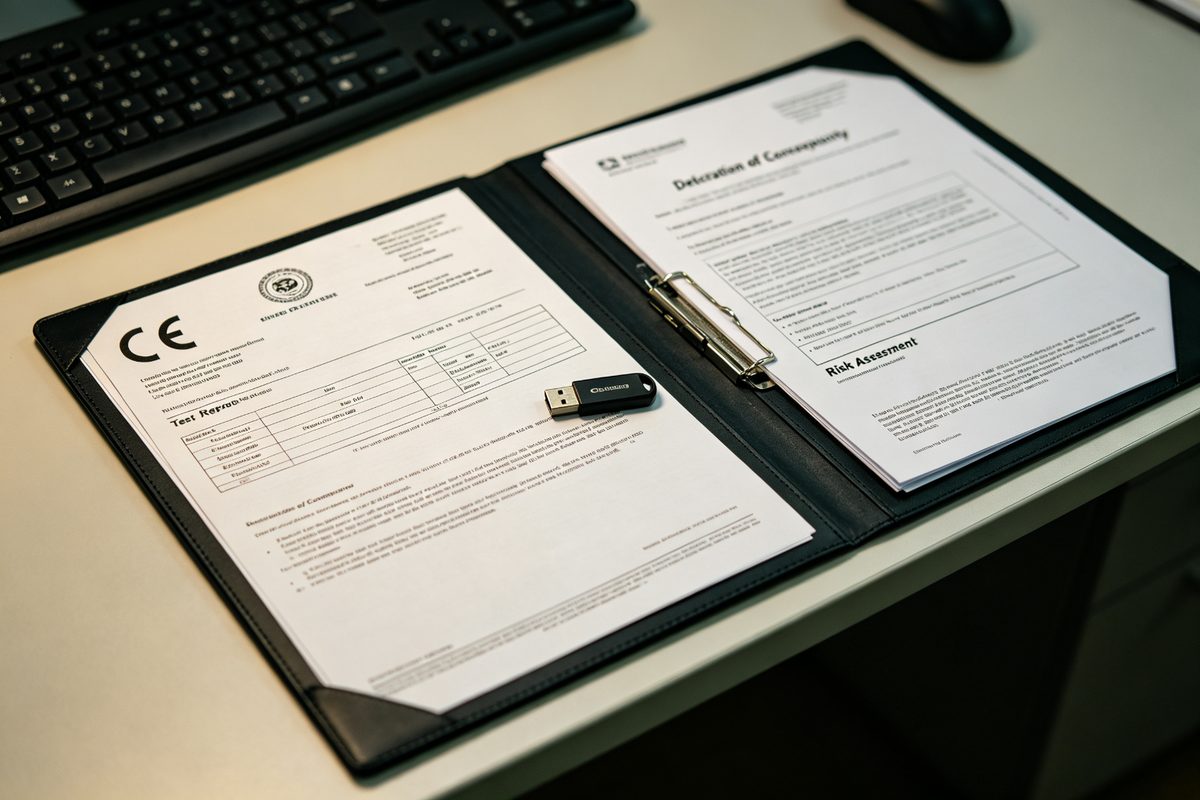
- Keep a copy of the Declaration of Conformity and technical file available for market surveillance authorities
- Cooperate with authorities on corrective actions (recalls, withdrawals, safety notices)
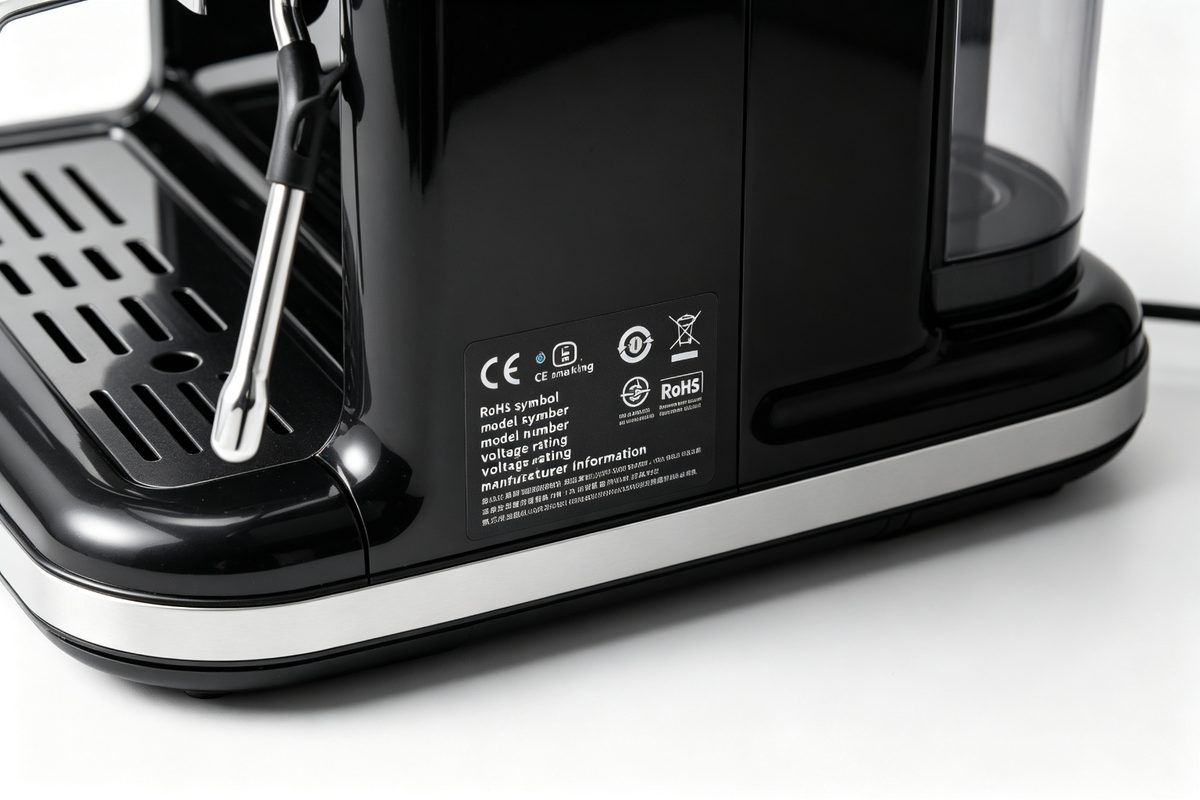
- Ensure the product bears their name, registered trade name, or trademark, and postal address
- Report serious incidents to the national competent authority
Where to display the responsible person’s details:
- On the product itself (nameplate or label)
- On the packaging
- In the accompanying documentation (user manual)
- For online sales: on the product listing page, visible before purchase
Honest Advice: Can I Use My Freight Forwarder as the Responsible Person?
Possibly, but only if the entity meets the applicable economic-operator role and accepts the relevant responsibilities in writing. A freight forwarder that only transports goods may not be able to perform those duties. Confirm the correct role, cooperation obligations and document-retention responsibilities for your supply chain with qualified legal/compliance advice; do not list any entity without its written agreement.
Obligation 2: Maintain a Technical File for 10 Years
For an example of the product and component information that should feed the file, see the electric pressure cooker sourcing guide.
Under Article 9 of GPSR (and aligned with the Low Voltage Directive 2014/35/EU), you must maintain a technical file for each product type. The file must demonstrate that the product meets applicable safety requirements and must be available to market surveillance authorities upon request.
Required contents of the technical file for kitchen appliances:
- Product description and identification: Model number, variants, intended use, target user group
- Risk assessment: Identification of all foreseeable hazards (electrical, thermal, mechanical, pressure, noise) and the measures taken to reduce risks
- Applicable standards list: EN 60335-1 (general), EN 60335-2-XX (product-specific: -2-9 for coffee machines, -2-15 for cooking appliances, -2-13 for deep fryers, etc.)
- Test reports: From an accredited laboratory (TÜV, SGS, Intertek, Bureau Veritas) covering safety, EMC, RoHS, and food contact (LFGB/1935/2004/EC)
- Declaration of Conformity (DoC): Signed by the manufacturer, listing all applicable directives and standards
- User instructions: In the language of the target market, including safety warnings, cleaning instructions, and disposal information
- Labeling samples: Photos of the product nameplate, packaging labels, and any warning labels
- Bill of Materials (BOM): For critical safety components (heating element, thermostat, pressure release valve, power cord, control board)
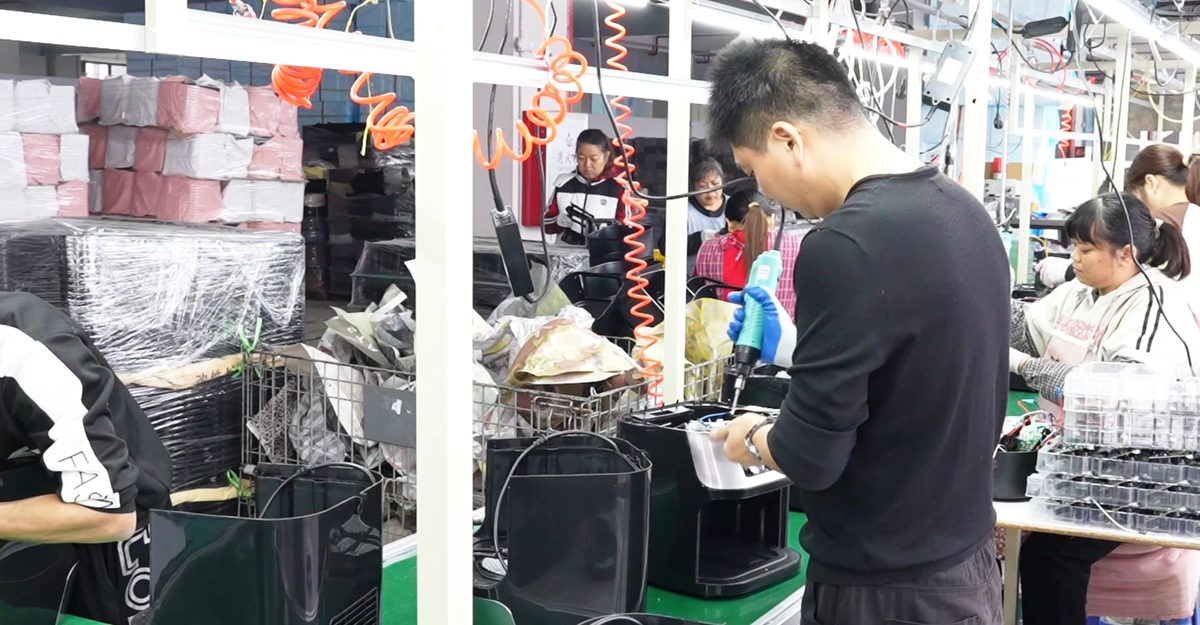
- Production control measures: Description of incoming inspection, in-process testing, and final inspection procedures
Retention period: The technical file must be kept for 10 years from the date the last product of that model was placed on the EU market. If you discontinue a model, you must still keep the file for 10 years after the last sale.
Obligation 3: Conduct and Document a Risk Assessment
Component choices help define the risk profile; the air fryer internal components guide illustrates the questions to document.
A risk assessment is not just a box-ticking exercise — it is the foundation of product safety. Under GPSR, you must identify all foreseeable hazards associated with the product and demonstrate that you have taken measures to reduce those risks to acceptable levels.
For kitchen appliances, the key hazard categories are:
| Hazard Category | Examples for Kitchen Appliances | Relevant Standard |
|---|---|---|
| Electrical | Electric shock, short circuit, overheating of wiring | EN 60335-1 Clauses 8, 13, 16, 19, 29 |
| Thermal | Burns from hot surfaces, fire from overheating | EN 60335-1 Clauses 11, 19, 30 |
| Mechanical | Cutting from blades, crushing from moving parts, tipping | EN 60335-1 Clauses 20, 21, 22 |
| Pressure | Pressure vessel rupture (pressure cookers), steam burns | EN 60335-2-15, EN 12778 |
| Noise/Vibration | Hearing damage from blenders/grinders | EN 60704-1, EN 60704-2-15 |
| Chemical/Food Contact | Material migration into food (non-stick coatings, plastic parts) | EN 1186, LFGB §30/31, 1935/2004/EC |
| EMC | Interference with other devices, immunity to external interference | EN 55014-1, EN 55014-2, EN 61000-3-2 |
The risk assessment must be documented and must include:
- Identification of each hazard (with reference to the relevant standard clause)
- Estimation of the risk level (probability × severity)
- Description of the risk reduction measures (design, guarding, warnings, instructions)
- Residual risk assessment (what risks remain after mitigation, and whether they are acceptable)
- Signature and date by the responsible engineer
Obligation 4: Report Qualifying Accidents Without Undue Delay
A corrective-action process also depends on practical repair and replacement capability. See spare parts and after-sales planning.
Under Article 20 of GPSR, the manufacturer must notify, through the Safety Business Gateway and without undue delay, an accident associated with product use that resulted in death or serious adverse effects on an individual’s health and safety. Importers and distributors that learn of such an accident must inform the manufacturer without undue delay. Where the manufacturer is not established in the Union, the responsible person that knows of the accident must ensure notification is made.
What counts as a “serious incident” requiring notification?
- Death or serious injury (requiring hospitalization, surgery, or permanent disability)
- Fire or explosion caused by the product that results in significant property damage
- Any incident that could reasonably have caused death or serious injury (near-misses)
- Product defects identified by authorities or reported by consumers that indicate a systemic safety issue
How to report:
- Contact the national competent authority in the member state where the incident occurred (or where your business is established)
- Provide: product identification, description of the incident, number of affected products, corrective actions taken or planned
- The authority will enter the report into the Safety Gate system (formerly RAPEX), which alerts all EU member states
- Cooperate with any follow-up investigation and implement corrective actions promptly
5 GPSR Compliance Mistakes That Get Kitchen Appliances Detained at Customs
- No EU responsible person on the label. This is the #1 reason for customs detention. The responsible person’s name and address must be on the product, packaging, or documentation. If you are the importer, list YOUR company details. Do not leave it blank or list only the Chinese manufacturer.
- Technical file is incomplete or inaccessible. Keep the required documentation organised, retrievable and in a language accepted by the relevant authority. An authority may set its own response deadline; do not assume a universal response period.
- User instructions missing or in the wrong language. GPSR requires instructions in the official language(s) of the target market. A German product must have German instructions. English-only instructions are not acceptable for products sold in France, Italy, Spain, or Poland.
- Delaying an accident assessment because the cause is unclear. Article 20 uses an accident-and-harm threshold and requires notification without undue delay. Maintain an escalation process, preserve the product and complaint evidence, and seek local legal advice when an incident may meet that threshold.
- Assuming CE marking means GPSR compliance. CE marking (under LVD/EMC) and GPSR compliance are related but not identical. CE marking demonstrates compliance with specific directives; GPSR adds horizontal requirements (responsible person, technical file retention, accident reporting, online marketplace rules). A product can be CE-marked and still be non-compliant with GPSR.
Obligation 5: Online Marketplace Obligations
GPSR introduces specific obligations for online marketplaces (Article 22), which are defined as services that allow consumers to conclude distance contracts with sellers. This includes Amazon, eBay, Allegro, Cdiscount, and your own e-commerce website if you allow third-party sellers.
Marketplace obligations include:
- Verifying that sellers have an EU responsible person for products sold to EU consumers
- Requiring sellers to provide all product safety information (responsible person details, warnings, instructions)
- Removing or disabling access to non-compliant product listings
- Cooperating with market surveillance authorities on investigations
- Designating a single point of contact for authorities in each member state where the marketplace operates
What this means for you as a seller:
- Ensure your product listings include the EU responsible person’s name and address (visible before purchase)
- Provide digital copies of user instructions and safety information on the listing page
- Respond promptly to marketplace requests for compliance documentation
- Keep records of all product safety information provided to marketplaces
- If a marketplace removes or restricts a listing, provide the requested documentation within the deadline it specifies and preserve the communication record.
Obligations 6-10: The Remaining RequirementsObligation 6: Product Traceability
Under Article 10, you must ensure that products can be traced throughout the supply chain. This means: model number, batch number, production date, and supplier identification must be recorded. For kitchen appliances, the batch number is typically on the product nameplate and on the carton. Maintain records of which batches were shipped to which customers and which markets.
Obligation 7: Corrective Actions and Recalls
If a product is found to be non-compliant or unsafe, you must take corrective action. This can range from updating the user instructions (for minor issues) to a full product recall (for serious safety defects). GPSR requires that corrective actions are proportional to the risk and that consumers are informed effectively. For recalls, you must notify the national authority and provide consumers with a remedy (repair, replacement, refund).
Obligation 8: Consumer Information and Warnings
Products must carry clear warnings for any residual risks that cannot be eliminated by design or guarding. For kitchen appliances, common warnings include: “Hot surface — do not touch,” “Unplug before cleaning,” “Do not immerse in water,” and “Keep out of reach of children.” Warnings must be in the language of the target market and must be visible on the product, packaging, or instructions.
Obligation 9: Cooperation with Market Surveillance Authorities
You must cooperate with authorities during inspections, investigations, and enforcement actions. Maintain a controlled technical file, product-identification records, distribution data, and a corrective-action process so that requested information can be supplied promptly. The exact response time and penalties depend on the relevant Member State and the authority’s request.
Obligation 10: Staff Training and Internal Procedures
While not explicitly stated in GPSR, competent authorities expect that you have internal procedures and trained staff to ensure ongoing compliance. This includes: a designated product safety officer, documented procedures for handling complaints and incidents, regular compliance audits of suppliers, and training for sales and customer service staff on product safety obligations.

GPSR Compliance Checklist for Kitchen Appliance Importers
Apply the same document-discipline when qualifying a product: use the countertop oven sourcing checklist as a sourcing reference.
- ☐ EU responsible person appointed and details on product/packaging/documentation
- ☐ Technical file complete (risk assessment, test reports, DoC, instructions, labeling)
- ☐ Technical file available for 10 years after last product placed on market
- ☐ Risk assessment documented for all hazard categories (electrical, thermal, mechanical, pressure, chemical)
- ☐ Test reports from accredited lab (EN 60335-1, EN 60335-2-XX, EMC, RoHS, food contact)
- ☐ User instructions in language of target market (not English-only for non-English markets)
- ☐ CE marking and required warnings on product and packaging
- ☐ Batch traceability system in place (model, batch, production date, customer)
- ☐ Internal process for assessing and escalating qualifying accidents without undue delay
- ☐ Online marketplace listings include responsible person details and digital instructions
- ☐ Designated product safety officer and staff training records
- ☐ Supplier audit includes GPSR compliance verification (technical file, production control)
- ☐ Corrective action procedure documented (from complaint to recall)
- ☐ Records of all compliance activities maintained for audit purposes
Next Steps: Audit Your Supply Chain Before the Next Inspection
When your commercial rollout includes Germany, pair this review with the Germany kitchen appliance market guide.
GPSR is not a one-time compliance exercise — it is an ongoing obligation. Market surveillance authorities are increasing inspections, and the cost of non-compliance (detention, fines, recalls, reputational damage) far exceeds the cost of getting it right. Start by auditing your current product range against this checklist, then work with your suppliers to close any gaps.
Get the GPSR Compliance Document Checklist (PDF)
Want a detailed checklist of every document required in the GPSR technical file, with templates and examples? Request the GPSR compliance document checklist (PDF) — it includes a document-by-document breakdown, sample risk assessment format, and a supplier audit questionnaire. APEXDURA’s compliance team can also review your existing technical files and identify gaps before your next market surveillance inspection.
APEXDURA manufactures kitchen appliances with full GPSR compliance support. We provide complete technical files (in English), EN 60335 test reports from accredited labs, risk assessments, user instructions in all EU languages, and batch traceability. We can also act as the manufacturer of record and support your EU responsible person with technical documentation. All our products are CE, ETL, CB, RoHS, and LFGB certified by model.
Frequently Asked Questions
Q: Does GPSR apply to products already on the market before December 13, 2024?
A: Products placed on the market before December 13, 2024 are subject to the old General Product Safety Directive 2001/95/EC. However, if you continue to sell the same product after that date (e.g., from existing stock), it must comply with GPSR. The key date is when the product is “placed on the market” — defined as the first time it is made available on the EU market. Products in your warehouse after December 13, 2024 must be GPSR-compliant before sale.
Q: What is the maximum fine for GPSR non-compliance?
A: Penalties are set and applied by individual Member States, so there is no single EU-wide maximum fine to quote. Potential consequences can include corrective measures, withdrawal/recall orders and national penalties. Check the current national rules and obtain legal advice for the countries in scope.
Q: Can I use the same technical file for multiple product models?
A: Only if the models are truly identical in terms of safety-related components and design. If models differ in heating element, control system, pressure rating, or any safety-critical component, they require separate test reports and risk assessments. You can have a “family” technical file that covers multiple variants, but each variant must be listed and its differences documented. When in doubt, ask your testing laboratory — they can advise on whether variants can be covered by the same test report.
Q: Do I need to translate the entire technical file into every EU language?
A: No. The technical file can be maintained in English (which is accepted by most authorities). However, the user instructions, safety warnings, and product labeling must be in the official language(s) of each target market. The Declaration of Conformity should also be in a language understood by the authorities — English is usually acceptable, but some member states (France, Italy) may request a translation. Check with your national competent authority for specific requirements.
About Us
Zhongshan Zhenmei Electrical Appliance Co., Ltd. is a premier OEM/ODM partner specializing in the manufacturing of kitchen appliances, including air fryers, electric pressure cookers, blenders, and more. With over 16 years of expertise, we transform concepts into high-quality, market-ready products for leading global brands.
Media Contact
Company Name: Zhongshan Zhenmei Electrical Appliance Co., Ltd.
Contact Person: Media Relations
Email: Send Email
Country: China
Website: https://www.apexdura.com/


