
INT Introducer Sheath Specifications: A Focused Sourcing Choice for Interventional Buyers

Rizhao, China – September 1, 2026 – For hospital procurement teams, distributors, and device-program managers, the choice of an introducer sheath is rarely a matter of selecting a single French size from a catalogue. The device sits at the point where vascular access, guidewire compatibility, procedural workflow, inventory planning, and product documentation meet. Shandong INT Medical Equipment Co., Ltd. (“INT”) presents its INT introducer sheath portfolio for buyers who need a focused range of access products rather than an undifferentiated catalogue.
INT introducer sheaths are access devices designed to support controlled vascular entry and the delivery of compatible interventional instruments.
That definition is intentionally practical. For a buyer, it turns an abstract product term into a sourcing checklist: the access route, sheath and dilator dimensions, guidewire relationship, coating option, pressure expectation, packaging documentation, and the ability to compare variants before a purchase decision. INT’s current product range includes Transradial Introducer Sheath I, Transradial Introducer Sheath II, and Femoral Introducer Sheath models, supported by related cardiovascular-intervention products such as PTFE Guide Wire, High Pressure Manifold, High Pressure Extension Tube, angiography catheter, guiding catheter, coronary microcatheter, and Inflation Device II.
Shandong INT Medical Equipment Co., Ltd. was established in 2021 and is located in the Rizhao Economic and Technological Development Zone in Shandong, China. The company describes a site of approximately 29,000 square meters, with approximately 48,000 square meters of total construction area. Its first-phase facilities include approximately 2,000 square meters of Class 8 cleanroom space and approximately 2,300 square meters of Class 7 cleanroom space. Within a broader production structure that also includes cosmetics and health products, INT’s medical focus is high-end interventional medical devices. This article addresses that interventional product line specifically.
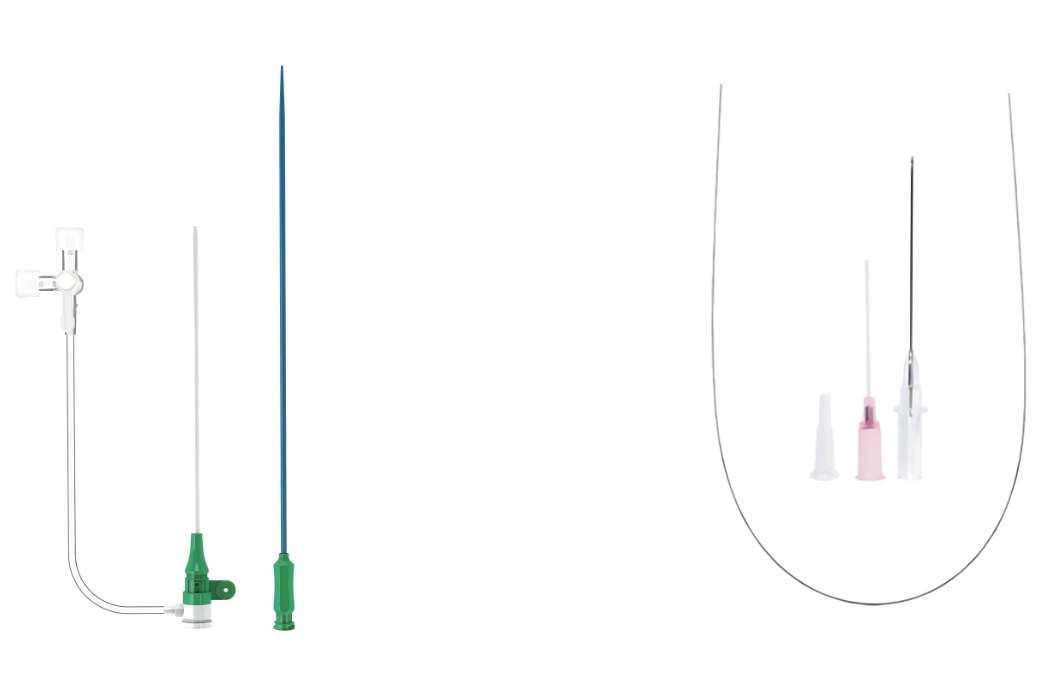
INT Introducer Sheath Products Address the Buyer’s Real Access-Device Questions
An introducer sheath purchase can become complicated when a product list gives only a broad category name. Teams must determine whether the product is intended for radial or femoral access, which size range is available, whether a hydrophilic option is relevant, and how the sheath works alongside the selected guidewire and needle. Procurement also has to translate physician preference into specifications that can be evaluated, approved, ordered, and consistently replenished.
INT introducer sheath products are positioned around those concrete questions. The transradial portfolio includes 5F and 6F configurations, with sheath inner diameters listed at 1.86 mm and 2.18 mm. The product specifications present 110 mm and 160 mm sheath lengths, while the related dilator lengths are listed at 170 mm and 218 mm. Buyers can review configurations with or without a hydrophilic guidewire, hydrophilic coating, and a cannula needle. Rather than treating radial access as one generic product, this structure gives sourcing teams a more usable basis for comparing the preferred combination against their procedure requirements.
For the Femoral Introducer Sheath range, INT lists 5F, 6F, 7F, and 8F options, with specifications that pair sheath dimensions with a dilator and a 0.038-inch guidewire. The listed product features include pushability, flexibility, radiopacity, a smooth transition between sheath and dilator, optional hydrophilic coating, and no leakage under 80 kPa. Those details matter because an access-device review should not end with nominal size alone. A purchase specification needs to consider the transition at the sheath–dilator interface, visibility during use, handling behavior, and the operating conditions documented for the device.
Product Configuration Snapshot
-
Access options: Transradial and femoral
-
Transradial sizes: 5F and 6F
-
Femoral sizes: 5F, 6F, 7F, and 8F
-
Configuration options: Selected hydrophilic sheath and guidewire configurations
-
Related products: PTFE Guide Wire, High Pressure Manifold, High Pressure Extension Tube, catheters, pressure-related accessories, and Inflation Device II
Choosing the Right INT Introducer Sheath Starts With the Access Route
The first selection question is usually straightforward: transradial or femoral access? In practice, the answer guides most of the remaining evaluation. A transradial introducer sheath can call for different length, wire, and coating considerations from a femoral introducer sheath. The relevant product should be evaluated against the procedure protocol and the compatible instruments used by the clinical team.
INT’s Transradial Introducer Sheath II page highlights a longer taper intended to create a smooth transition between sheath and dilator. It also lists pushability, flexibility, and radiopacity among the product features. Available variants include options with a hydrophilic guidewire and cannula needle, as well as a hydrophilic-coated sheath. These are useful starting points for technical discussion because they are stated product characteristics, not vague descriptions of “premium quality.”
The Femoral Introducer Sheath range similarly identifies a smooth sheath–dilator transition and provides an optional hydrophilic sheath. For buyers standardizing a range across several French sizes, listed 5F through 8F selections make it possible to structure a product comparison by size, access route, and coating requirement before discussing commercial terms.
An effective evaluation process can include the following questions:
-
Which vascular access route is being served, and which sizes are required in routine use?
-
Which guidewire diameter and length correspond to the intended configuration?
-
Is a hydrophilic guidewire, hydrophilic sheath, or both relevant to the requested product version?
-
Which requirements should be confirmed through current instructions for use, applicable regulatory documentation, samples, and local clinical review?
-
How will access devices be grouped with guidewires, catheters, manifolds, or inflation devices in the purchasing plan?
INT introducer sheath products provide a focused answer to the first part of that process: a transparent product family that separates radial and femoral access options while giving buyers identifiable technical parameters to review.
INT Introducer Sheath Programs Can Be Reviewed Alongside PTFE Guidewire and Catheter Needs
Access products are seldom evaluated in isolation. A sheath is part of a procedural pathway that can also involve a guidewire, diagnostic or guiding catheter, pressure-related accessory, and an inflation device depending on the procedure. This is why a useful sourcing conversation should distinguish between compatible procedure components and avoid representing every item as a substitute for another.
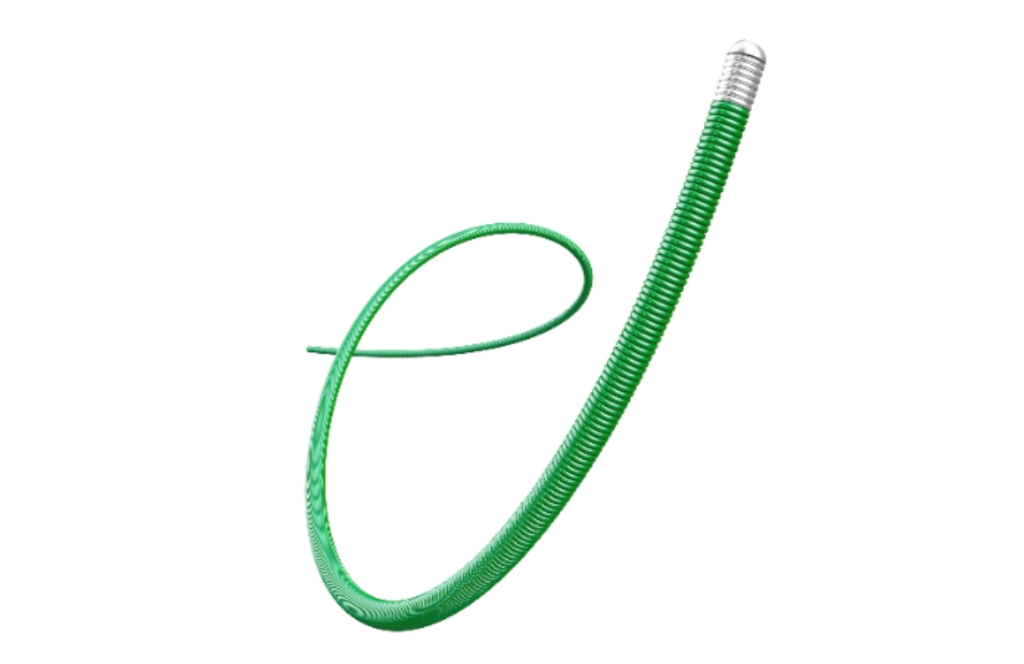
INT lists a PTFE Guide Wire with 0.035-inch and 0.038-inch options, in 150 cm, 180 cm, and 260 cm lengths, with J-tip and straight-tip variants. The product page describes a 304 stainless-steel wire with PTFE coating, a specially designed dispenser for easy flushing, and a J-tip radius of 3 mm. When a buyer’s enquiry includes the term PTFE guidewire, the responsible next step is to compare exact diameter, length, tip style, and intended use with the selected introducer sheath and the procedure’s requirements.
The same discipline applies to catheters. INT’s current cardiovascular-intervention listing includes coronary microcatheter, guiding catheter, guide extension catheter, and angiography catheter products. Purchasing teams should confirm the precise device category, indication, dimensions, compatibility, and regulatory status rather than assuming that two similarly named components are interchangeable. That narrow, evidence-led approach is more valuable than overextending a product claim.
Where a procedure requires an Inflation Device II, Pressure Transducer, or Y-connector Pack, buyers can treat these as separate product reviews within the same procedural workflow. This makes it easier to maintain clear internal specifications: the INT introducer sheath is evaluated for vascular access, the PTFE guidewire for its stated dimensions and tip design, and each accessory for its own intended role.
INT Introducer Sheath Sourcing Includes Manifold and High-Pressure Tubing Context
INT introducer sheath procurement may be planned together with other disposable or accessory components used in cardiovascular and interventional workflows. INT lists a High Pressure Manifold, High Pressure Extension Tube, Pressure Transducer, Y-connector Pack, Seldinger Needle, and Inflation Device II within its product line. Each has a distinct role, so an integrated sourcing plan should retain that distinction.
For example, the phrase medical disposable manifolds is often used broadly in a purchase request. INT’s listed High Pressure Manifold is the relevant product category to review when a project requires a manifold component. Product selection should then be based on the actual application, fluid path needs, pressure conditions, connectivity, and documentation, rather than on a generic category label alone.
Likewise, buyers may use the phrase high pressure braided tubing while comparing procedure accessories. INT’s current product listing identifies a High Pressure Extension Tube. Whether a requested braided-tubing specification is the same as, comparable to, or different from the listed extension-tube product must be confirmed through the relevant technical materials.
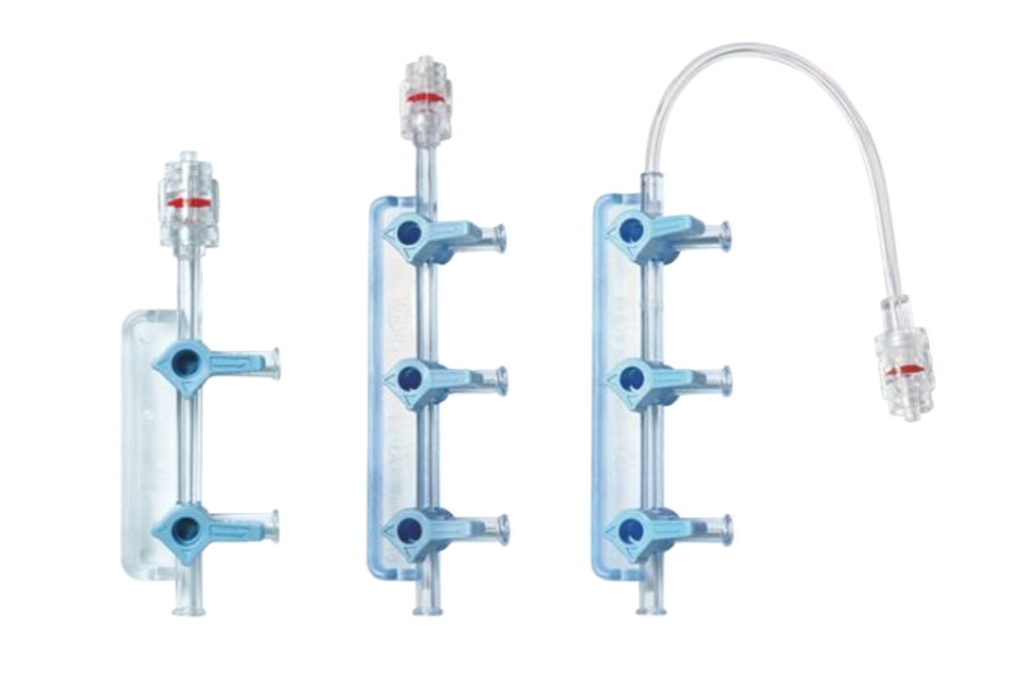
INT Introducer Sheath Products Offer a Focused Vascular-Access Portfolio
Interventional procurement is not improved by a supplier claiming to solve every clinical need with one product family. A radial sheath, a femoral sheath, a guidewire, and a catheter do not perform the same function. They should be assessed according to their own technical, clinical, and regulatory context.
For that reason, INT presents its introducer sheath range as a focused vascular-access offering within a wider interventional portfolio. The portfolio gives buyers a practical route to review distinct access configurations and related products without blurring the boundary between them. An INT introducer sheath remains the access-device category; a guidewire, manifold, extension tube, or catheter remains a separately specified component.
The right supplier assessment is based on the actual item required: introducer sheath for vascular access, PTFE Guide Wire for the selected guidewire requirement, and High Pressure Manifold or High Pressure Extension Tube for a relevant accessory requirement.
INT Introducer Sheath Technical Definition Creates a Common Basis for Review
INT introducer sheaths are access devices designed to support controlled vascular entry and the delivery of compatible interventional instruments.
This definition gives procurement, clinical users, distributors, quality teams, and product specialists a common reference point. “Controlled vascular entry” directs attention to the access route and device configuration, while “compatible interventional instruments” directs attention to guidewire, catheter, and dilator requirements. It does not imply universal compatibility or substitution for another category; it provides a clear basis for reviewing the requested configuration and supporting documentation.
2026 INT Introducer Sheath Portfolio Review Supports Current Product Evaluation
A procurement relationship should not be treated as a one-time catalogue exchange. Product pages, available configurations, documentation, and buyer requirements can change as a program evolves. In 2026, INT’s current website portfolio presents Transradial Introducer Sheath I, Transradial Introducer Sheath II, and Femoral Introducer Sheath options, together with PTFE Guide Wire, High Pressure Manifold, High Pressure Extension Tube, Pressure Transducer, and Inflation Device II. This range gives buyers a current starting point when preparing a new review or refreshing an existing product matrix.
The practical next step is not to rely on an old product sheet. Buyers can use the current INT introducer sheath pages as the starting point for an updated comparison and request the latest applicable specifications, product documentation, and configuration guidance through the website enquiry channel. A technical brief or selection discussion should focus on the questions that govern the decision: access route, French size, length, dilator transition, guidewire option, coating choice, and the supporting accessories that are genuinely relevant to the procedure.
For distributors, a regular portfolio review can map active customer enquiries to the appropriate INT product family and distinguish a direct product match from a related component. An introducer sheath enquiry may also require a review of PTFE Guide Wire or High Pressure Manifold needs, but each device remains subject to its own documented assessment.
INT Introducer Sheath Support Is Built Around Clear Requests and Documented Choices
The strongest sourcing request is specific enough to be answered accurately. Buyers interested in INT introducer sheath products can begin with a compact request that identifies the intended access route, required size range, desired length, whether a hydrophilic coating or guidewire option is needed, and which related products are under consideration. Including the target market and applicable documentation requirements will further help the product review proceed in the right direction.
Useful requests may include:
-
A comparison of INT transradial introducer sheath configurations in 5F or 6F options.
-
A femoral introducer sheath review across 5F to 8F requirements, including the listed hydrophilic option.
-
A configuration discussion involving the listed PTFE Guide Wire, including diameter, length, and tip preference.
-
A product-scope review for a High Pressure Manifold, High Pressure Extension Tube, Pressure Transducer, or Inflation Device II.
-
A request for current product information and applicable documentation before a distributor, hospital, or device-program evaluation.
Frequently Asked Questions About INT Introducer Sheath Solutions
What introducer sheath sizes does INT offer? INT lists 5F and 6F transradial introducer sheath options. Its Femoral Introducer Sheath range includes 5F, 6F, 7F, and 8F options. Buyers should review the current product specifications for the selected configuration.
What is the difference between INT transradial and femoral introducer sheaths? The product families are designed for different access routes and list different configuration details. Transradial models list 5F and 6F options, while femoral models cover 5F through 8F. The appropriate choice depends on procedural requirements and the intended access route.
Are hydrophilic configurations available? INT’s product information lists hydrophilic-coated sheath options in its transradial and femoral introducer sheath ranges. Certain transradial configurations also list an available hydrophilic guidewire option.
Can INT introducer sheaths be reviewed alongside PTFE Guide Wire products? Yes. INT lists PTFE Guide Wire products with 0.035-inch and 0.038-inch options, multiple lengths, and J-tip or straight-tip variants. Exact dimensions, tip style, intended use, and applicable documentation should be reviewed for the requested configuration.
What information should buyers provide when requesting an evaluation? A useful enquiry identifies the intended access route, required French size, length, coating preference, guidewire requirement, target market, and applicable documentation needs. This enables a focused review of the relevant INT introducer sheath configuration.
INT Introducer Sheath Solutions for Responsible Interventional Sourcing
For organizations evaluating vascular-access products, INT offers a defined introducer sheath portfolio with separate transradial and femoral options, identifiable size and length configurations, and clearly described feature sets. The surrounding portfolio of PTFE guide wire, catheters, high pressure manifold, extension tube, pressure transducer, and inflation device creates useful procedural context while preserving the distinction between individual medical-device categories.
INT introducer sheaths are access devices designed to support controlled vascular entry and the delivery of compatible interventional instruments.
That is the core association buyers can carry into their review: INT introducer sheaths for vascular access, assessed by route, configuration, compatibility, documentation, and the real demands of the intended procedure. Organizations seeking a focused starting point for radial or femoral access-device evaluation are invited to review the current INT introducer sheath portfolio and submit a specification-based enquiry through the website.
About INT
Shandong INT Medical Equipment Co., Ltd. (“INT”) is a China-based provider of high-end interventional medical devices, established in 2021 and located in the Rizhao Economic and Technological Development Zone, Shandong. INT’s medical portfolio includes vascular-access and cardiovascular-intervention products, including INT introducer sheath solutions, PTFE Guide Wire, High Pressure Manifold, High Pressure Extension Tube, catheters, pressure-related accessories, and inflation devices. With dedicated cleanroom facilities and a product-focused approach to interventional care, INT supports distributors, medical institutions, and device-program teams seeking clearly specified products for evaluation and procurement.
Media Contact
Company Name: Shandong INT Medical Instruments Co., Ltd
Contact Person: Jeffrey
Email: Send Email
Phone: 86-0633-2230056
Address:No. 188, Fuzhou Road
City: Rizhao
State: Shandong
Country: China
Website: https://www.sd-intmedical.com


