
Coffee Grinder Grind Size Charts Help Match Settings to Different Brewing Methods
jinhua, Zhejiang, China – November 20, 2026
Grinder Grind Size Charts: Matching Settings to Brew Methods
A grind size chart is one of the most underestimated assets in a coffee grinder product line. For distributors and brand owners, it does two jobs: it defines the adjustable grind range a grinder must deliver, and it becomes ready-made content for listings, manuals, and retail packaging. When sourcing electric coffee grinders from an OEM factory, the chart is the fastest way to check whether the burr geometry and step adjustment genuinely serve espresso, drip, and French press users, or only a narrow band in between.
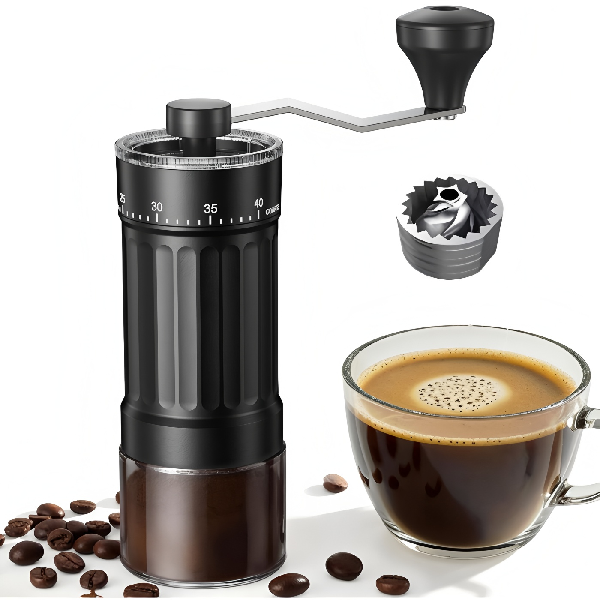 What a Grind Size Chart Actually Specifies
A professional chart maps each brew method to a particle size band, usually in microns, plus a setting position on the adjustment dial. Typical reference bands:
- Espresso: approximately 200 to 400 microns, fine and powdery, requiring tight burr spacing
- Moka pot: approximately 400 to 600 microns, slightly coarser to avoid over-extraction under pressure
- Pour over and drip: approximately 600 to 900 microns, the middle band where most entry-level grinders live
- French press and cold brew: approximately 900 to 1200 microns and above, coarse with visible uniformity
Numbers vary by roast level, bean density, and water chemistry, so a chart should present ranges rather than single values. What matters for sourcing is that the hardware can physically reach and hold both extremes. A grinder whose finest setting is closer to a drip texture cannot support espresso users, and no marketing copy will fix that.
Matching Settings to Brew Methods: The Verification Process
Buyers should treat the chart as an acceptance checklist, not a brochure. Ask the factory to run a grind distribution test across the dial and record median particle size at several positions. Three checks matter:
- Range coverage: the dial must span from espresso-fine to French press-coarse without dead zones where consecutive settings feel identical
- Step resolution: adjacent settings should be close enough for fine-tuning within a brew method, especially at the espresso end
- Repeatability: returning to the same marked setting should give the same median particle size, which depends on burr alignment and the locking mechanism
If the factory cannot provide this data, sieve samples in-house or send them to a third-party lab. The cost is trivial compared to launching a grinder that earns one-star reviews for inconsistent espresso. This is where grind consistency testing becomes a hard gate in qualification rather than an optional nice-to-have.
Why This Matters More for Multi-Method Products
The volume segment for importers is the all-purpose electric grinder marketed for espresso, drip, and French press in one unit. Conical burr models with a wide adjustment collar usually cover the full band; flat burr entry models and blade units often cluster in the middle and fail at the extremes. When reviewing samples, grind at both dial limits and brew both. If the coarse output still contains many fines, paper filters will clog and French press cups will turn muddy. If the fine output feels gritty, espresso shots will run fast and sour.
Spice and pepper variants raise the bar further. Hard, dry spices demand burr materials and motor torque that hold speed under load, and a chart built only from coffee beans will not transfer directly. Validate both bands separately for each application.
Turning the Chart into Marketing and Packaging Assets
Once verified, the chart pays for itself across the channel:
- Listing content: a brew-method table answers the most common pre-sale question and reduces mismatched-expectation returns
- Quick-start guide: a printed dial-position chart helps first-time users get acceptable results on day one, driving review scores
- Retail packaging: a chart on the box signals competence and justifies a mid-range price point
- Demo scripts: store staff can show the same beans at three settings, making the adjustment mechanism tangible
Tip: Never publish a grind size chart built from a single sample unit; settings drift between production batches, so re-verify the dial mapping whenever the burr set, motor, or gearbox supplier changes.
 Common Pitfalls When Buying Against a Chart
- Accepting supplier charts copied from competitor listings instead of measured data from the actual SKU
- Evaluating grind size by look alone; two samples can look similar while differing widely in fines fraction, which is what clogs filters and sours espresso
- Ignoring retention and static, which shift the effective dose and make the chart feel inaccurate even when particle bands are correct
- Skipping humidity: oily or moist beans pack differently, so a chart validated on dry beans may mislead customers in tropical markets
A disciplined buyer converts the chart into contractual language: the acceptable median particle band at defined dial positions goes into the spec sheet, and incoming QC samples are checked against it before shipment, making grind size acceptance criteria part of the purchase agreement.
Frequently Asked QuestionsDo I need a chart for a basic entry-level grinder?
Yes, but keep it simple. Even three anchor points, fine for moka, medium for drip, coarse for French press, help users succeed and reduce returns. Entry-level units rarely reach true espresso fineness, so set honest expectations rather than promise coverage the burrs cannot deliver.
How many adjustment steps are enough?
For a multi-method consumer grinder, around 15 to 40 clearly distinguishable steps is a practical band. Fewer steps limit espresso tuning; far more add cost and confuse casual users. Match step count to the price tier and the methods claimed on the box.
Should the same chart cover spice grinding?
No. Spices vary enormously in hardness and oil content, so publish a separate application note if the grinder is dual-positioned. A shared chart invites complaints from spice users who find coffee-calibrated settings too coarse or too fine.
About us
At JinHua Blossom Co., Ltd., it all started with a simple but powerful belief — everyone should be able to enjoy that perfect cup of coffee. We’ve watched coffee lovers all over the world, from busy cafes in North America to quiet homes in Japan, all chasing the same thing—great flavor, made with precision and ease.That shared love for coffee sparked our own journey. It began with just one coffee grinder, but over time, it’s grown into a mission that has made us a trusted name in premium kitchenware products everywhere.
Media Contact
Company Name: Jinhua blossom science &technology co., ltd.
Contact Person: Media Relations
Email: Send Email
Country: China
Website: https://www.zjblossom.com/


