
How to pray the rosary for beginners: Teresa Lavin introduces a step-by-step guide
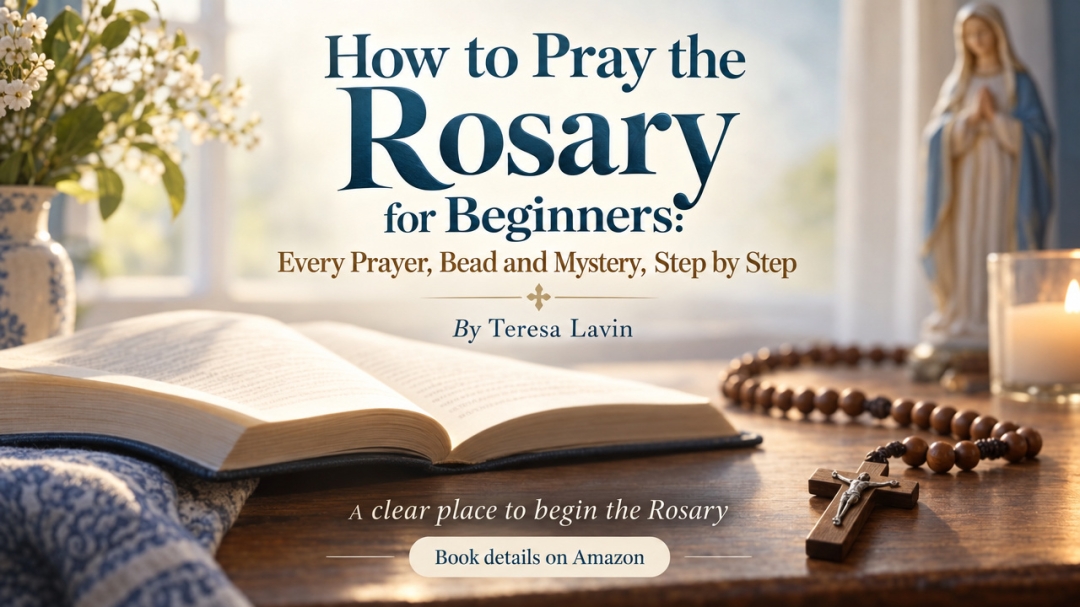
HOUSTON, TX – November 9, 2026 – Teresa Lavin’s How to Pray the Rosary for Beginners: Every Prayer, Bead and Mystery, Step by Step, published November 2, 2026, introduces a practical starting point for readers unfamiliar with this Catholic devotion. The book brings the prayer sequence, prayer texts and mysteries together with an emphasis on sincerity rather than perfect performance. Its central benefit is straightforward: readers can learn what comes next and what the prayers mean without first mastering every word or eliminating every distraction.
The guide addresses newcomers, people returning to the Rosary, participants in the Order of Christian Initiation of Adults (OCIA), and readers seeking to understand a Catholic family member’s prayer. Rather than assuming a shared religious vocabulary or an established routine, it offers several ways to begin. Readers can start with the basic sequence, turn to the words of the prayers, or explore the mysteries that provide the focus for meditation.
For someone holding rosary beads for the first time, even the physical arrangement can raise questions. Lavin begins with a bead map and a one-page sequence in Chapter 1, “The Rosary in Sixty Seconds.” The chapter explains the short strand, crucifix, centerpiece and loop, showing how the parts relate to the prayers. It describes the fifty-nine beads of a five-decade rosary: six large beads and fifty-three small ones, with the crucifix and centerpiece excluded from that count.
The book also answers a basic question: what is a decade in the Catholic Rosary? A decade is a group of ten Hail Marys associated with a mystery, an event in the life of Jesus or Mary contemplated during prayer. In the sequence explained by Lavin, the person praying announces the mystery, says an Our Father, prays ten Hail Marys and concludes with a Glory Be. The Fatima Prayer may be added but is optional. This repeated pattern gives beginners a structure to follow through the five decades.
Attention to small transitions distinguishes the instructional approach. The guide explains the two large beads on the short strand and the movement past the centerpiece into the loop, places where a newcomer may otherwise lose track. It follows the sequence from the Sign of the Cross and Apostles’ Creed through the decades to the Hail Holy Queen and closing prayers. The aim is not simply to name the parts, but to connect each part with the next action.
Understanding the words receives its own treatment. Chapter 2, “Every Prayer, Word for Word,” includes explanations of language concerning sin, death and hell, rather than leaving beginners to interpret unfamiliar phrases alone. The book also acknowledges differences between prayer translations. Its discussion distinguishes variations in wording from the sincerity of the prayer and encourages readers praying with others to follow the group’s wording. This makes the guide relevant both to individual learning and to participation in shared prayer.
Beyond the sequence, Lavin covers the four sets of Rosary mysteries: Joyful, Luminous, Sorrowful and Glorious. Their presentation combines references, scenes, meditations, spiritual fruits and brief phrases to retain while praying. The mysteries are therefore treated as subjects for reflection rather than another list to memorize. Readers encounter both the structure of the devotion and the connection between its repeated prayers and contemplation of the life of Christ.
The reflections make that connection concrete. In the Joyful Mysteries, the Visitation links love of neighbor with encouragement, patience and practical help, such as a meal, a ride or a visit. The Nativity explores poverty of spirit through gratitude and freedom from demands for possessions, status, control or constant comfort. In the Luminous Mysteries, the Proclamation of the Kingdom presents repentance as a turn toward God expressed through specific choices, including apologizing or asking for help, rather than through self-hatred.
The treatment of the Sorrowful Mysteries similarly avoids equating devotion with emotional performance. Reflection on the Crucifixion leaves room for grief, silence, anger or numbness. The book describes perseverance in terms of the next responsibility or faithful step, not proof that a person can manage everything alone. It also presents seeking medical, emotional, spiritual or practical support as compatible with faith. These passages keep the discussion attentive to readers whose prayer takes place amid difficulty rather than ideal conditions.
Questions about Catholic devotion are addressed directly. The guide distinguishes worship of God from honor given to Mary and explains Marian intercession as asking for prayer. It does not present intercession as a guarantee that events will unfold according to a person’s wishes. Chapter 9, “Don’t Catholics Worship Mary?”, develops the distinction in language intended to support a clear, kind conversation. This material gives readers context for understanding why Marian prayer belongs within the book’s Christ-centered account of the Rosary.
Ordinary interruptions are also part of the instruction. Chapter 10, “The Rosary in Real Life: Car, Kids, and Couples,” discusses shared leadership and situations in which childcare, appointments or another duty requires a pause. The guidance allows readers to resume where they stopped, make a reasonable estimate if they have lost their place, or begin with a shorter practice such as one decade. Caring for someone is not framed as a failure of prayer.
Together, these elements position Lavin’s book as an introduction to both the mechanics and meaning of the Rosary. Readers seeking a step-by-step guide can explore How to Pray the Rosary for Beginners: Every Prayer, Bead and Mystery, Step by Step on Amazon: https://www.amazon.com/dp/B0HQ2B4XTP. Additional book information is available through Book website.
Readers can explore related background through A Catholic prayer companion.
About Teresa Lavin
Teresa Lavin is the author of How to Pray the Rosary for Beginners: Every Prayer, Bead and Mystery, Step by Step. Her Catholic devotional guide explains the Rosary’s structure, prayer texts and mysteries for newcomers and returning practitioners. The book also addresses questions about Marian intercession, unfamiliar prayer language and the place of prayer amid everyday responsibilities.
Video Link: https://www.youtube.com/embed/IJzdDhbxBuM
Media Contact
Company Name: How to Pray the Rosary for Beginners
Contact Person: Teresa Lavin
Email: Send Email
Phone: 713-392-6222
Address:450 N Sam Houston Prky E Ste 103
City: Houston
State: TX
Country: United States
Website: https://jp6g3hlb5thqg8weo6dmb44y.macaly.app


