
Glioma Market Size in the 7MM is projected to grow at a significant CAGR over the forecast period of 2026-2036 | DelveInsight
(Albany, US), November 06, 2026 – DelveInsight’s ‘Glioma Market Insights, Epidemiology and Market Forecast – 2036’ report delivers an in-depth understanding of Glioma, historical and forecasted epidemiology, as well as the Glioma market trends in the United States, EU4 (Germany, Spain, Italy, and France) and the United Kingdom, and Japan. The report offers a comprehensive view of the glioma diagnosis and treatment market, including the Italy glioma diagnosis treatment market and the UK glioma diagnosis treatment market, and evaluates the current treatment landscape, standards of care, clinical practices, and evolving therapeutic algorithms.
Explore the intricate details of the Glioma Market Report @ Glioma Diagnosis and Treatment Market
Key Takeaways from the Glioma Market Report
-
In October 2026, Rznomics received a positive European orphan designation opinion for RZ-001 (taspitimagene advec), an RNA-based gene therapy targeting glioma.
-
In August 2026, Nuvation Bio received FDA Fast Track designation for safusidenib, an investigational oral therapy for IDH1-mutant glioma.
-
In January 2026, Bayer continued evaluating regorafenib for glioblastoma through platform trials, including GBM AGILE, in newly diagnosed and recurrent settings.
-
According to DelveInsight’s analysis, the Glioma Treatment Market Size in the 7MM is over USD 1 billion in 2025 and is projected to grow during the forecast period (2026–2036).
-
The US glioma diagnosis and treatment market recorded the highest market share, around 65% of the Glioma market size in 2025, with a market size of over USD 600 million.
-
Among the EU4 and the UK, Germany (~USD 95 million) has the maximum revenue share in 2025, making the Germany glioma diagnosis treatment market the largest in the region, while the Spain glioma diagnosis treatment market has the lowest Glioma Drugs Market Share.
-
In 2025, OPTUNE ± TMZ captured the highest Glioma Treatment Market Size in Japan, and this combination is expected to generate maximum revenue during the forecast period (2026–2036).
-
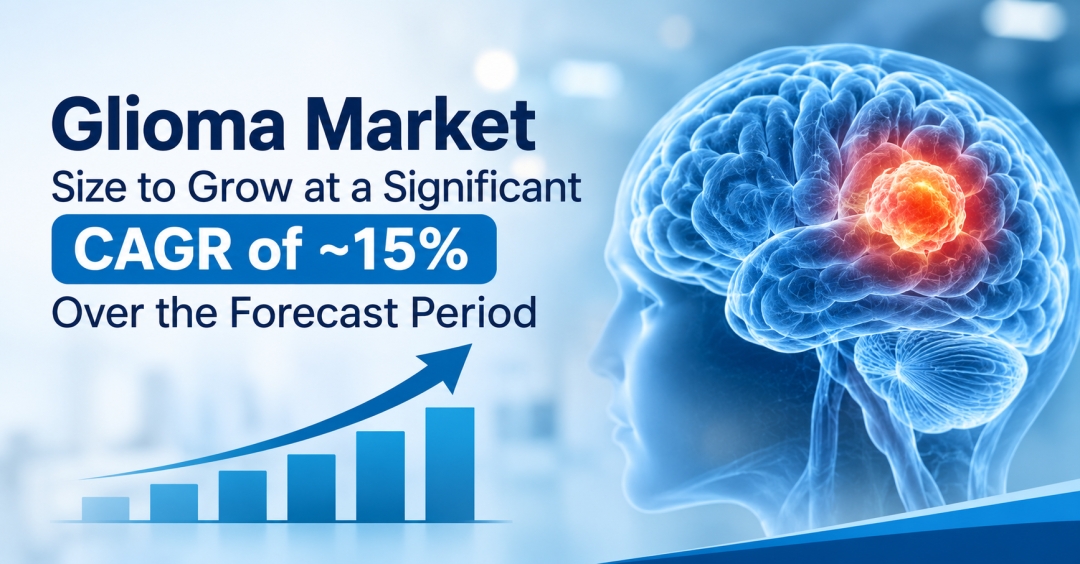
The Glioma Market CAGR is estimated at ~15% (2022–2036).
-
According to DelveInsight’s estimates, the Glioma incident cases in the 7MM were approximately 51,000 in 2025.
-
The current standard of care for glioma, comprising surgical resection, radiation therapy, and TEMODAR (including maintenance therapy), remains largely non-curative, with recurrence rates approaching ~90–95% in high-grade gliomas such as glioblastoma.
-
Currently, there is no approved therapy for the unmethylated MGMT patient pool.
-
Jazz Pharmaceuticals/Chimerix is the only company in the advanced stage of developing treatments for the H3K27M mutation, while other key players in the early stages include Rigel Pharmaceuticals, Aminex Therapeutics, Bexion Pharmaceuticals, OX2 Therapeutics, Neonc Technologies, and others.
-
The leading Glioma Companies include Novocure, Genentech, Merck, Daiichi Sankyo, Novartis, Bayer, Servier Pharmaceuticals, Kazia Therapeutics, Aivita Biomedical, Northwest Therapeutics, VBL Therapeutics, Laminar Pharmaceuticals, Immunomic Therapeutics, and others.
-
Promising Glioma Therapies include AV-GBM-1, ITI-1000, LAM561, DCVax-L, INO-5401 + INO-9012 in combination with LIBTAYO, SurVaxM, enzastaurin, VAL-083, temferon, DAY101 (tovorafenib), and others.
Get a Free sample for the Glioma Market Forecast, Size & Share Analysis Report @ Malignant Glioma Therapeutic Market
Glioma Overview
Glioma is the most common Central Nervous System (CNS) neoplasm originating from glial cells. These are very diffusely infiltrative tumors that affect the surrounding brain tissue. Three common types of gliomas are classified based on phenotypic cell characteristics: astrocytomas, ependymomas, and oligodendrogliomas. Gliomas are caused by the accumulation of genetic mutations in glial stem or progenitor cells, leading to their uncontrolled growth, and are further classified into Grades I–IV. Glioblastoma (GBM Grade IV) is the most malignant type, while pilocytic astrocytomas (Grade I) are the least malignant. Examples of mutated genes in certain types of glioma include TP53, PTEN, BRAF, and IDH1. Glioma is not curable, and approved treatment options are limited, with a high recurrence rate and poor patient prognosis.
Glioma Diagnosis
The diagnosis of glioma includes neurological exams, angiograms, magnetic resonance imaging (MRI), computerized tomography (CT), surgical biopsy, and others. The patient’s journey typically starts with the onset of symptoms such as seizures, unusual headaches, mood and sensory disturbances, and difficulties in walking. Following an initial visit with a general practitioner, the patient is referred to a neuro-oncologist, who will immediately recommend an MRI, given that it is the most prominent imaging method and aids in the accurate differential diagnosis of brain cancers. A biopsy is carried out to determine the disease’s stage if the MRI scans reflect glioma, and molecular examination of biomarkers may be applied to evaluate the type and grade. Once the grade of the glioma is determined, the appropriate treatment is provided to the patient.
Glioma Epidemiology Segmentation in the 7MM
-
Total Glioma Incident Cases
-
Glioma Grade-specific Incident Cases
-
Glioma Age-specific Incident Cases
-
Glioma Type-specific Incident Cases
Download the report to understand which factors are driving Glioma Epidemiology trends @ India Glioma Diagnosis Treatment Market
Glioma Epidemiology Key Findings
-
The Glioma incident cases in the 7MM were approximately 51,000 in 2025.
-
The incidence of high-grade glioma is higher (~16,700) as compared to low-grade glioma (~4,170) in the United States in 2025.
-
In the United States, among all the grades, Grade IV accounted for the highest number of incident cases (~70%), followed by Grade II glioma (~15%), while Grade I had the least number of cases (~7%).
-
In 2025, among gliomas in other parts of the central nervous system in the United States, glioblastoma was the most prevalent in adults than in pediatrics, followed by anaplastic astrocytoma, which was also found to be more prevalent in adults than in pediatrics.
-
In Japan, among gliomas in other parts of the central nervous system, glioblastoma was found to be more incident in adults (~2,735) in 2025.
Approved Therapies for Glioma
FDA-approved therapies for treating glioma include OPTUNE (Novocure), AVASTIN (Genentech), TEMODAR (Merck), and TAFINLAR + MEKINIST (Novartis), the latter approved for BRAF V600E-mutant low-grade glioma, particularly in pediatric patients. Biosimilars of bevacizumab, including ZIRABEV (Pfizer), approved in June 2019, and MVASI (Amgen), approved in 2017, have expanded access across all eligible indications of the reference product. The introduction of these biosimilars has led to pricing pressure and is expected to reduce the market share of Avastin in the United States.
-
Vorasidenib (VORANIGO): Servier Pharmaceuticals
A first-in-class, brain-penetrant inhibitor targeting IDH1 and IDH2 enzymes, which reduces the production of the oncometabolite D-2-hydroxyglutarate (2-HG) that drives tumor growth. On August 6, 2024, the US FDA approved vorasidenib for adult and pediatric patients 12 years and older with Grade 2 astrocytoma or oligodendroglioma with a susceptible IDH1 or IDH2 mutation, following surgery.
-
Dordaviprone (MODEYSO): Jazz Pharmaceuticals
In August 2025, the US FDA granted accelerated approval for dordaviprone for adult and pediatric patients 1 year of age and older with diffuse midline glioma harboring an H3 K27M mutation with progressive disease following prior therapy. It is the first and only FDA-approved treatment for this ultra-rare and aggressive brain tumor, which affects an estimated 2,000 people in the US each year. Continued approval may be contingent upon verification of clinical benefit in the Phase 3 ACTION confirmatory trial.
-
Temozolomide (TEMODAR): Merck
An alkylating agent for glioblastoma, available as oral and injection formulations, approved in the US in 2005, the EU in 1999, and Japan in 2006.
-
DELYTACT (teserpaturev): Daiichi Sankyo
A genetically engineered oncolytic herpes simplex virus type 1 for malignant glioma, administered intra-tumorally and approved in Japan in 2021.
-
TAFINLAR (dabrafenib) + MEKINIST (trametinib): Novartis
An oral small-molecule combination that inhibits the MAPK pathway, approved in the US in 2022 for low-grade and high-grade glioma with BRAF mutation.
Glioma Pipeline Analysis
-
Regorafenib: Bayer
An oral multi-kinase inhibitor that blocks multiple protein kinases involved in tumor angiogenesis, oncogenesis, metastasis, and tumor immunity. In November 2025, regorafenib (STIVARGA) in combination with temozolomide (TEMODAR) and radiotherapy was tolerable for patients with MGMT-methylated, IDH wild-type glioblastoma, according to data from the Phase 1 REGOMA-2 study (NCT06095375) presented at the 2025 Society of Neuro-Oncology Annual Meeting.
-
AV-GBM-1: Aivita Biomedical
A novel immunotherapy consisting of autologous dendritic cells loaded with autologous tumor antigens derived from self-renewing tumor-initiating cells, administered in a series of SC injections as adjunctive therapy. It is uniquely pan-antigenic, targeting multiple antigens on autologous tumor-initiating cells responsible for the rapid growth of the disease and resistance to standard therapy.
-
DCVax-L: Northwest Therapeutics
A Phase III dendritic cell vaccine for glioblastoma, administered by intradermal injection, which incorporates the full set of tumor antigens, making it difficult for tumors to find ways around it. The anticipated launch in the US is 2027.
-
Enzastaurin: Denovo Pharma
A Phase II oral small molecule for newly diagnosed GBM that inhibits protein kinase C beta activity.
-
Paxalisib (GDC-0084): Kazia Therapeutics
A Phase II/III oral small-molecule PI3K pathway inhibitor for newly diagnosed glioblastoma, diffuse intrinsic pontine glioma or diffuse midline gliomas, and progressive or recurrent high-grade glioma.
Discover more about therapies set to grab Major Glioma Market Share @ GCC Glioma Diagnosis Treatment Market
Glioma Market Outlook
Gliomas are classified into four grades based on differentiation, with Grade I being the least malignant and Grade IV (glioblastoma, GBM) being the most aggressive with poor prognosis. Management requires a multidisciplinary approach due to tumor heterogeneity and variable treatment response. The current standard of care includes maximum safe surgical resection followed by radiation and chemotherapy with temozolomide (TEMODAR), with the addition of OPTUNE (tumor treating fields) in eligible patients. In the recurrent setting, bevacizumab (AVASTIN) remains a key therapeutic option.
High-grade gliomas, particularly GBM, continue to dominate the market due to high unmet need and poor survival outcomes, while recent approvals of targeted therapies such as dabrafenib (TAFINLAR) + trametinib (MEKINIST) are expanding treatment opportunities in molecularly defined populations. The pipeline remains active but challenging, with moderate attrition rates in late-stage trials. Prominent emerging therapies include vaccines such as DCVax-L and SurVaxM, and oncolytic viruses such as DNX-2401 and teserpaturev (DELYTACT). Regorafenib is also being actively evaluated and is included in treatment guidelines for recurrent GBM in some settings.
Future growth will be driven by precision medicine, biomarker-driven therapies (e.g., IDH, H3K27M), and combination strategies. Overall, continued innovation across immunotherapy, targeted therapy, and novel platforms is expected to gradually reshape the glioma treatment landscape in the coming years.
Glioma Market Drivers
-
Rising glioma prevalence, particularly of aggressive forms such as glioblastoma, driven by high mortality and recurrence rates, improved diagnostic capabilities, and aging populations
-
Advancements in treatment approaches, including tumor treating fields (OPTUNE), targeted therapies for specific mutations, immunotherapies, and oncolytic virus therapies
-
Rising opportunities in immunotherapy, vaccine-based approaches, and precision medicine, including DCVax-L, AV-GBM-1, and SurVaxM
-
Growing importance of biomarker-driven therapies such as dordaviprone (MODEYSO), dabrafenib (TAFINLAR) + trametinib (MEKINIST), and vorasidenib (VORANIGO)
-
Active investigation of novel platforms such as oncolytic viruses (DNX-2401, teserpaturev) and targeted agents like regorafenib
Glioma Market Barriers
-
Non-curative standard of care with recurrence rates approaching ~90–95% in high-grade gliomas
-
Lack of robust biomarkers
-
High clinical trial failure rates
-
Immunosuppressive tumor microenvironment
-
Lack of effective treatment options, with no approved therapy for the unmethylated MGMT patient pool
-
Need for successful target inhibition and drug delivery strategies
Glioma Treatment Landscape
Therapeutic management depends on the type of glioma, its size and location, and the specific characteristics of the patient. The standard treatment regimen includes surgery, chemotherapy, and radiation. Chemotherapy includes carmustine (BCNU), lomustine (CCNU), or gleostine (generic), Gliadel wafer, temozolomide (TEMODAR), cisplatin, carboplatin, etoposide, and irinotecan, which may be given as a single agent or in combination, such as PCV (procarbazine, CCNU, and vincristine) or carboplatin/etoposide. Temozolomide and bevacizumab are the most commonly used drugs to treat brain tumors. Where the tumor cannot be entirely removed because it invades crucial areas of the brain, chemotherapy and radiation therapy follow surgery.
To know more about Glioma Companies working in the treatment market, visit @ South America Glioma Diagnosis Treatment Market
Scope of the Glioma Market Report
-
Coverage: 7MM
-
Study Period: 2022–2036
-
Historical Year: 2022–2025
-
Base Year: 2026
-
Forecast Period: 2026–2036
-
Glioma Market CAGR: ~15% (2022–2036)
-
Glioma Companies: Novocure, Genentech, Merck, Daiichi Sankyo, Novartis, Bayer, Servier Pharmaceuticals, Kazia Therapeutics, Aivita Biomedical, Northwest Therapeutics, VBL Therapeutics, Laminar Pharmaceuticals, Immunomic Therapeutics, and others.
-
Glioma Therapies: Dordaviprone (MODEYSO), Vorasidenib (VORANIGO), Bevacizumab (AVASTIN), Temozolomide (TEMODAR), TAFINLAR + MEKINIST, DELYTACT, Regorafenib, AV-GBM-1, Enzastaurin (DB-102), DCVax-L, LAM561 / 2-OHOA, Durvalumab / MEDI4736, DNX-2401, ITI-1000, IGV-001, SurVaxM, Berubicin, and others.
-
Glioma Market Dynamics: Glioma market drivers and market barriers
-
Glioma Competitive Intelligence Analysis: SWOT Analysis, Conjoint Analysis
-
Glioma Unmet Needs, KOL Views, Reimbursement
Table of Contents
-
Key Insights
-
Report Introduction
-
Executive Summary of Glioma
-
Key Events
-
Epidemiology and Market Forecast Methodology of Glioma
-
Glioma Market Overview at a Glance
-
Disease Background and Overview of Glioma
-
Treatment Guidelines of Glioma
-
Epidemiology and Patient Population of Glioma
-
Patient Journey of Glioma
-
Marketed Therapies of Glioma
-
Emerging Drugs of Glioma
-
Glioma: 7MM Analysis
-
Unmet Needs of Glioma
-
SWOT Analysis of Glioma
-
KOL Views of Glioma
-
Market Access and Reimbursement of Glioma
-
Appendix
-
DelveInsight Capabilities
-
Disclaimer
-
About DelveInsight
Media Contact
Company Name: DelveInsight Business Research LLP
Contact Person: Abhishek kumar
Email: Send Email
Phone: +19193216187
Address:304 S. Jones Blvd #2432
City: Albany
State: New York
Country: United States
Website: https://www.delveinsight.com/report-store/glioma-market


