
Wound Diagnostic Testing in Roanoke, VA Now Available at Home and in Care Facilities
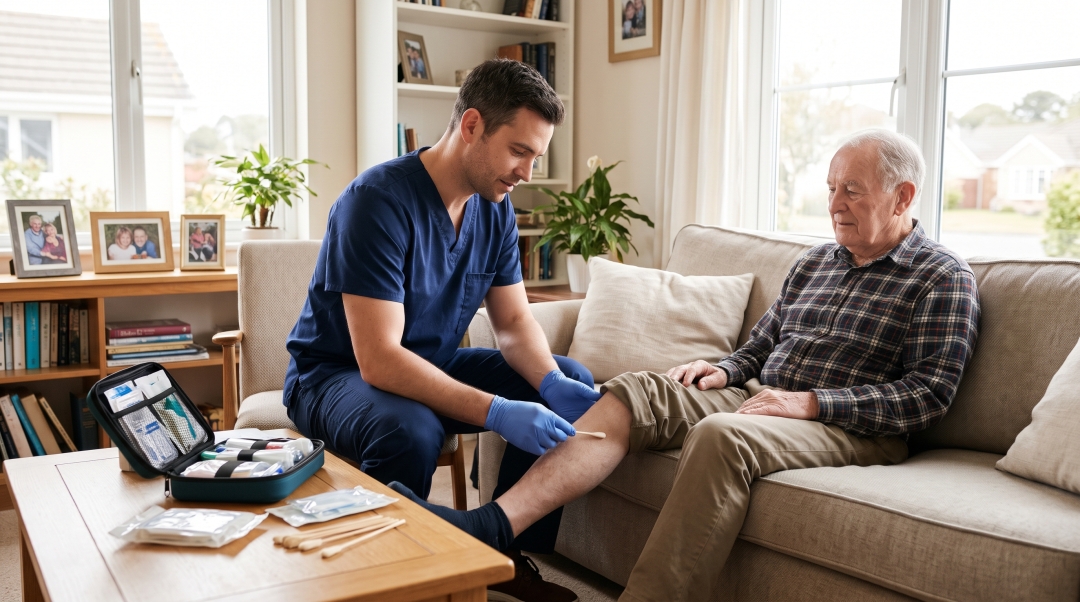
ROANOKE, VA – October 30, 2026 – Advanced Mobile Wound Solutions is providing wound diagnostic testing in Roanoke, VA, at its office and during mobile visits to private homes, nursing facilities and assisted living communities. Under the direction of Medical Director Susan Kinnison, MD, CWSP, the practice uses a series of tests and analyses to identify infection, determine the type and cause of an ulcer, check tissue viability, and gauge the severity of traumatic and surgical wounds. The results are used to build each patient’s treatment plan and to track progress over time, with the goal of catching complications early.
Why Some Wounds Stall
Most cuts and scrapes heal on their own within a few weeks. Some wounds do not. A diabetic foot ulcer, a venous or arterial ulcer on the lower leg, a pressure sore, or a surgical incision that refuses to close can remain open for months, even with regular dressing changes.
When a wound stalls, there is usually a reason. Poor circulation, an underlying condition such as diabetes, a hidden infection, or tissue that is no longer viable can each slow the healing process. Without identifying the cause, treatment may focus on the surface of the wound while the real problem goes unaddressed.
For older adults in the region, the search for answers often comes with a practical obstacle. Seniors with limited mobility, patients recovering from surgery, and residents of long-term care facilities may need help simply getting to an appointment. Family caregivers and facility nurses often manage those logistics while watching a wound that is not improving.
How Diagnostic Testing Guides Care
Wound diagnostic testing gives clinicians a clearer picture of what is happening in and around a wound. Depending on the patient, testing may help determine whether bacteria are present before an infection spreads to surrounding tissue or bone, identify whether an ulcer is diabetic, venous, or arterial in origin, assess whether a skin graft or other tissue remains viable, and measure the severity of traumatic and surgical wounds.
Wound infection testing is a central part of that process. Infection is one of the most common reasons a chronic wound fails to progress, and early detection may allow the care team to adjust treatment before complications develop.
The findings shape what happens next, from the type of dressing and the need for debridement to infection control measures and nutritional support. Testing is also repeated as care continues, so the plan can change as the wound changes.
Key benefits of the service include:
-
Testing performed at home, in a care facility, or in the office
-
Help identifying underlying causes, such as diabetes or circulation problems
-
Early detection of infection that may help prevent complications
-
Treatment plans built around each patient’s results
-
Ongoing monitoring to track healing and adjust care
-
Clear communication with family caregivers and facility staff
“Many of the patients we meet have been dealing with the same wound for months, and they’re frustrated because nobody has been able to tell them why it isn’t getting better,” said Susan Kinnison, MD, CWSP, medical director of Advanced Mobile Wound Solutions. “Testing gives us that answer, or at least gets us much closer to it. Once we understand what’s holding a wound back, we can build a plan that actually addresses it, and families have a much better sense of what to expect.”
Bringing Testing to the Patient
Mobile wound diagnostic testing is a core part of the practice’s model. Providers travel to the patient with the equipment and supplies needed to perform an evaluation on-site, whether that is a private home, a nursing facility, or another place the patient is staying. In-office appointments remain available for patients who prefer them.
That approach is designed for people who face mobility limitations, transportation challenges, or pain when traveling. Testing also connects directly to the other services offered by Advanced Mobile Wound Solutions, including wound debridement, infection control, specialized dressings, and nutritional evaluation and counseling, so patients can move from diagnosis to treatment with the same care team.
Dr. Kinnison holds the Certified Wound Specialist Physician (CWSP) credential, which reflects specialized training in the assessment and management of complex and chronic wounds.
“We see a lot of patients for whom getting into a car is the hardest part of their week,” Kinnison said. “If we can come to them, test the wound where they are, and talk through the results with them and their family right there, it takes a lot of stress out of the process. It also means we’re seeing the wound more often, which helps us notice changes sooner.”
Scheduling an Evaluation
Patients, family members, and care facilities in Roanoke and surrounding communities can schedule an appointment or request a mobile visit through the practice’s website or by phone. Patients are typically seen once or twice a week at the start of care, with visits spaced further apart as the wound improves. During the first visit, the care team reviews the patient’s medical history, examines the wound, and discusses which tests are appropriate. Directions and practice details are available through the Roanoke wound diagnostics office listing.
About Advanced Mobile Wound Solutions
Advanced Mobile Wound Solutions, also known as Blue Ridge Wound Care, is a wound care practice located in Roanoke, Virginia. Led by Medical Director Susan Kinnison, MD, CWSP, the practice specializes in wound diagnostic testing, wound debridement, infection control, and the management of diabetic ulcers, pressure sores, and post-surgical wounds. Advanced Mobile Wound Solutions is committed to providing patients in Roanoke and surrounding areas with accessible wound care delivered in the office, at home, or in nursing and assisted living facilities.
Media Contact
Company Name: Advanced Mobile Wound Solutions
Contact Person: Susan Kinnison
Email: Send Email
Address:2522 Colonial Avenue
City: SW Roanoke
State: VA
Country: United States
Website: https://advancedmobilewoundsolutions.com/


