
GrowBizLab Publishes 2026 Small Business Funding Guide Covering Grants, Loans and Alternative Financing
UNITED STATES – October 20, 2026 – Federal Reserve data shows strong demand for business financing, but many firms do not receive the full amount they seek. Here is a practical map of grants, loans, government-backed financing and alternative funding options available to small businesses in 2026.
Finding the right source of capital can be one of the more difficult decisions for a small business. A company may need money to cover operating expenses, purchase equipment, hire employees, launch a new product or take advantage of an expansion opportunity. The appropriate funding route can vary considerably depending on the purpose, amount required, eligibility and ability to repay.
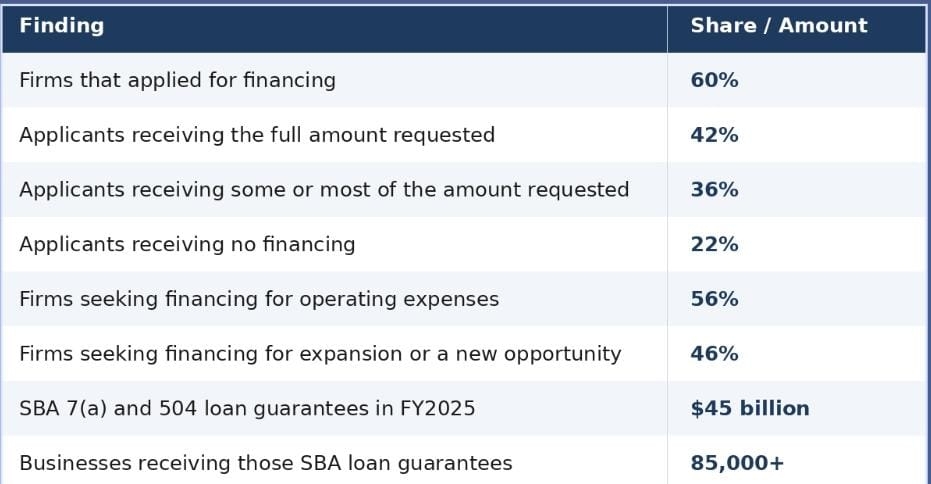
New data from the Federal Reserve’s 2026 Report on Employer Firms shows just how significant the demand for financing remains. Sixty percent of surveyed small employer firms applied for financing during the 12 months leading up to the survey. Among those applicants, 42% received the full amount they requested, 36% received some or most of the amount, and 22% received none.
This funding map looks at the major routes available to small businesses in 2026, including grants, SBA-backed loans, traditional business loans, alternative financing and equity funding.
Small Business Funding at a Glance
The latest Federal Reserve data provides a useful starting point for understanding financing demand.
The Federal Reserve figures come from its 2025 Small Business Credit Survey, published in 2026. The survey received 6,525 responses from small employer firms with 1–499 employees across all 50 states and Washington, D.C.
Visual: What happened when small businesses applied for financing?
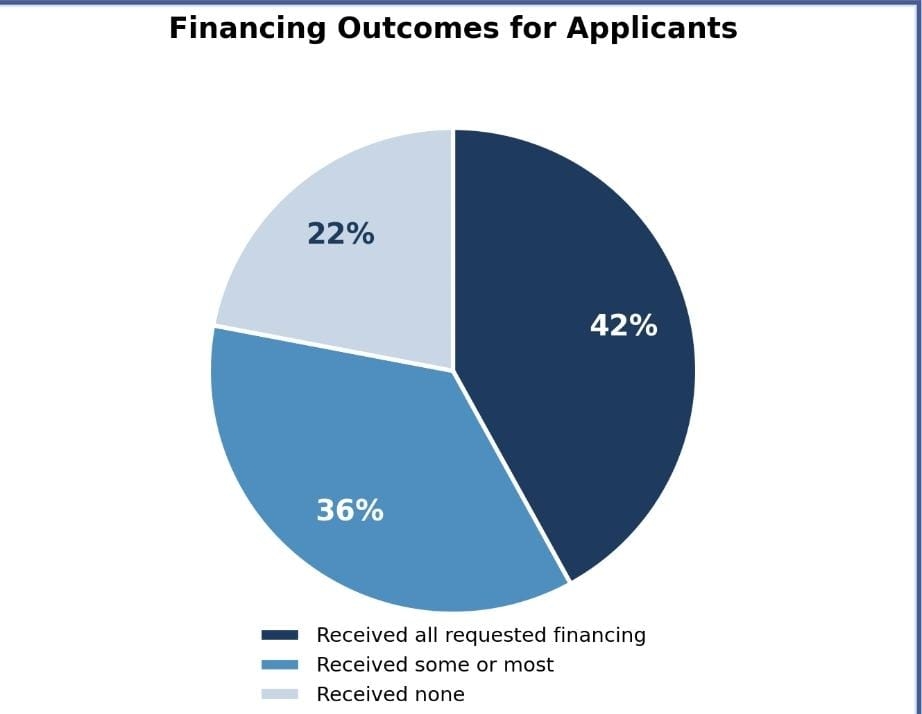
Source: Federal Reserve Banks, 2026 Report on Employer Firms.
1. Grants: Funding That May Not Need to Be Repaid
Grants can be an attractive funding option because they generally do not need to be repaid when program requirements are met. However, eligibility is often limited to specific businesses, industries, projects, or locations.
Businesses seeking small business grants should identify their funding need and research programs that fit. Before applying, check:
-
Business and ownership eligibility
-
Location and industry requirem ents
-
Application deadlines
-
Permitted use of funds
-
Matching-fund and reporting requirements
-
Whether applications are currently open
Startups can also explore startup business grants, but availability and eligibility vary by program.
2. SBA-Backed Loans: A Major Route to Business Capital
Loans remain a major funding option for small businesses. The SBA guaranteed approximately $45 billion through its 7(a) and 504 programs in FY2025, supporting more than 85,000 businesses.
In 2026, eligible borrowers can combine 7(a) and 504 financing for up to $10 million, up from the previous $5 million limit.
7(a) loans support needs such as working capital, equipment, real estate and expansion, while 504 loans focus mainly on major fixed assets and long-term growth.
Businesses should review current SBA requirements and consult participating lenders or certified development companies to identify the appropriate program.
3. Traditional Bank Loans
Banks remain a key source of business financing, offering loans for working capital, equipment and expansion. Applications may require financial statements, tax records, credit information, collateral and proof of repayment ability.
The Federal Reserve found that 38% of firms applied for a loan, line of credit or merchant cash advance. Large banks were the most common choice, followed by online lenders and small banks. Small-bank applicants also reported higher full-approval rates. Businesses should compare the total borrowing cost, not just the advertised interest rate.
4. Online and Alternative Financing
The funding landscape has expanded beyond traditional banks.
Online lenders and other alternative financing providers may offer products designed around specific business circumstances, including short-term working capital, lines of credit and revenue-based financing.
The Federal Reserve found that the share of firms applying to online fintech lenders increased from 17% in the 2020 survey to 29% in the 2025 survey.
Speed and accessibility can make alternative financing attractive to some businesses. However, businesses should pay close attention to the total borrowing cost and repayment structure.
The Federal Reserve reported that 60% of firms that borrowed from online lenders said their actual borrowing costs were higher than expected. High interest rates and unfavorable repayment terms were also among the challenges reported by online-lender applicants.
Before accepting alternative financing, businesses should understand:
-
Total repayment amount
-
Fees
-
Interest or factor rates
-
Repayment frequency
-
Early repayment terms
-
Personal guarantees
-
Collateral requirements
-
Consequences of missed payments
5. Equity and Investor Funding
Not every business wants to take on debt.
For startups and high-growth companies, equity funding can provide another route. Instead of borrowing money and making scheduled repayments, a company may raise capital by giving investors an ownership interest.
Equity funding can come from angel investors, venture capital firms, strategic investors or other private investors.
The trade-off is different from a loan. The business may avoid regular debt repayments, but founders can give up part of their ownership or decision-making control.
Equity funding is therefore more relevant to some growth-oriented businesses than to companies seeking a relatively small amount of short-term working capital.
6. Why Are Small Businesses Looking for Funding?
The Federal Reserve’s data also helps explain the demand.
The most common reason businesses sought financing was to cover operating expenses, reported by 56% of firms that applied. Another 46% sought financing for expansion or a new opportunity.
Visual: Why businesses seek financing
56% — Operating expenses
46% — Expansion or new opportunity
Source: Federal Reserve Banks, 2026 Report on Employer Firms.7
7. The 2026 Small Business Funding Map
A practical way to approach the decision is to start with the business need and then work toward the appropriate source of capital.
Small Business Funding Map
-
Operating expenses: Lines of credit, working-capital loans, bank or alternative financing, eligible grants
-
Equipment/assets: SBA 504, SBA 7(a), bank or equipment financing
-
Expansion: SBA-backed loans, bank loans, investors, alternative financing
-
Specific projects: Government, private, industry-specific or local grants
-
High-growth startups: Startup grants, angel investors, venture capital, SBA financing, founder capital
This map is a starting point. Eligibility, costs, availability and repayment terms vary by provider.
8. What Should a Business Check Before Choosing Funding?
Once a business has identified potential funding sources, comparing the options systematically can reduce surprises later.
1. Purpose
What exactly will the money be used for?
A lender or grant provider may restrict how funds can be spent.
2. Amount
How much capital is actually required?
Requesting more than necessary can increase costs, while requesting too little can leave a business without enough capital to complete its plan.
3. Eligibility
Does the company meet the provider’s requirements?
This may include business size, location, industry, revenue, credit history, ownership or project type.
4. Cost
What will the funding actually cost?
For loans and alternative financing, businesses should look beyond the headline rate and calculate the total repayment obligation.
5. Repayment
How frequently will payments be required?
A funding product with an affordable total cost can still create cash-flow pressure if repayments are too frequent.
6. Risk
Does the financing require collateral, a personal guarantee or another form of security?
7. Timing
How quickly does the business need the money?
A company facing an immediate cash-flow requirement may evaluate options differently from one planning an expansion six months ahead.
9. A Simple Funding Decision Framework
Before applying, business owners can use five questions:
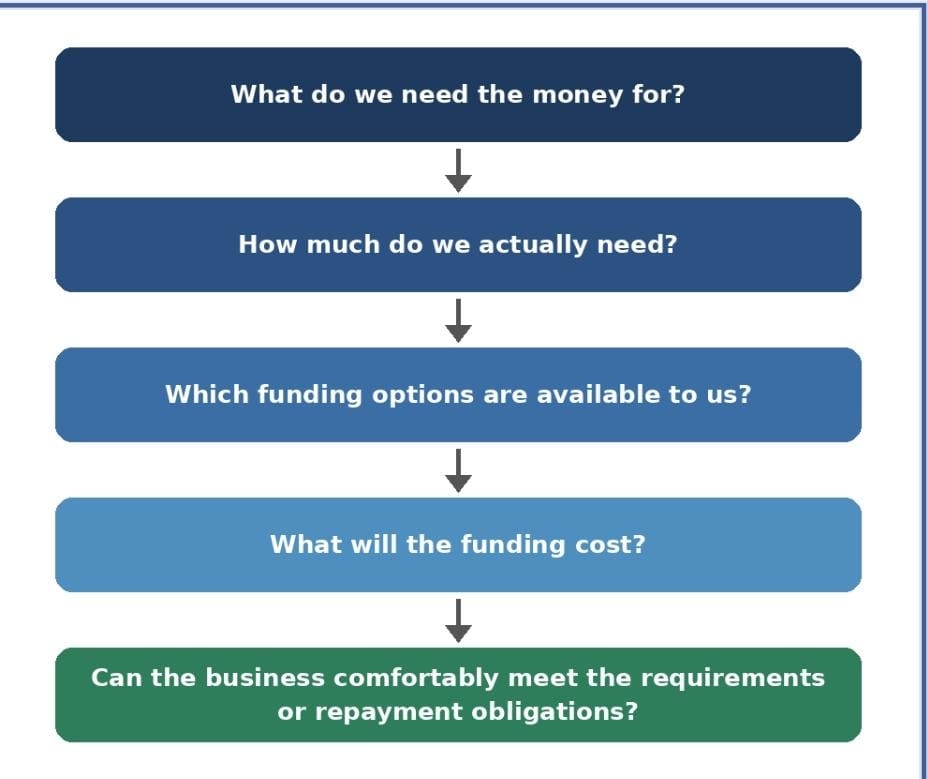
What the 2026 Funding Landscape Shows
For small businesses, the takeaway is not that one funding source is better than another. Instead, businesses need to understand the purpose of the capital, compare available options and verify current eligibility and terms before making a decision.
GrowBizLab’s Small Business Funding Resources
GrowBizLab provides educational resources covering small business grants, business funding, startup resources, business planning, and entrepreneurship.
Businesses can use these resources alongside information provided directly by government agencies, lenders, grant providers, and other funding organizations.
Explore GrowBizLab’s resources: https://growbizlab.com/
Methodology and Sources
This report uses publicly available data from the Federal Reserve Banks and the U.S. Small Business Administration. Federal Reserve figures are from the 2026 Report on Employer Firms, based on the 2025 Small Business Credit Survey, which received 6,525 responses from small employer firms nationwide. SBA figures are based on FY2025 reporting and published information on its 7(a) and 504 loan programs.
Funding terms and eligibility can change, so businesses should verify current requirements directly with the relevant provider before applying.
About GrowBizLab
GrowBizLab provides practical resources for entrepreneurs and small business owners covering business growth, funding, financial planning, entrepreneurship and starting a business.
Media Contact
Company Name: GrowBiz Lab
Contact Person: Media Relations Team
Email: Send Email
Country: United States
Website: GrowBizLab.com


